War Cemeteries
Ten cemeteries, four nations, and three quite different ideas of what a war grave is for.
The Normandy American Cemetery above Omaha is the one almost everyone sees: white marble crosses in ranks on a bluff over the beach, and a visitor centre that carries the whole story. It is also the busiest place in Normandy on a summer morning. Go early if you want it quiet.
The Commonwealth cemeteries work differently, and once you have seen one you will notice the pattern everywhere. Headstones rather than crosses, planting between the rows like a garden, and space at the foot of each stone for words the family chose. Bayeux War Cemetery is the largest Commonwealth burial ground in France and the natural first one to visit. Ranville holds the airborne dead beside the church of the first village liberated in France. Bény-sur-Mer and Bretteville-sur-Laize are Canadian, and the ages cut into those stones are the thing visitors remember.
La Cambe is the counterweight, and it is worth the detour precisely because it is uncomfortable. More than 21,000 German dead under dark stone markers laid flat in the grass, with a grass mound at the centre. Nothing about it is triumphant, and it changes the tone of a day spent at the Allied sites.
Four are small and quiet and take fifteen minutes each: Ryes, Hermanville, Saint-Manvieu, and Jerusalem, which holds only a few dozen graves and is the smallest Commonwealth cemetery in Normandy. If you have an afternoon rather than a week, pair the American cemetery with La Cambe. The contrast is the lesson.
10 places
View on mapOmaha Beach (2) · Gold Beach (1) · Juno Beach (1) · Sword Beach (2) · Caen and the Bocage (2) · Bayeux and the Bessin (2)
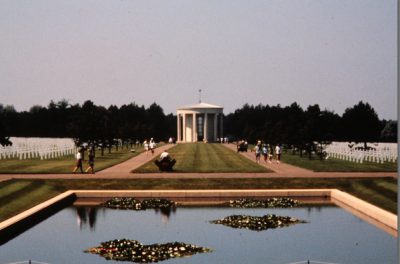
Normandy American Cemetery
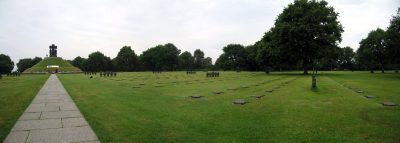
La Cambe German War Cemetery
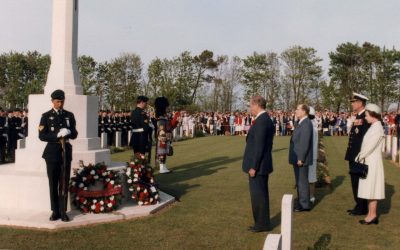
Bény-sur-Mer Canadian War Cemetery
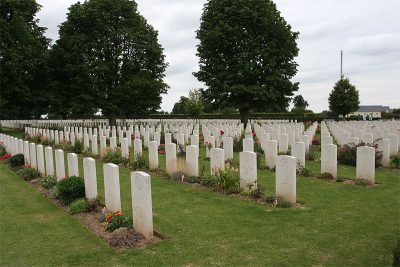
Bayeux War Cemetery
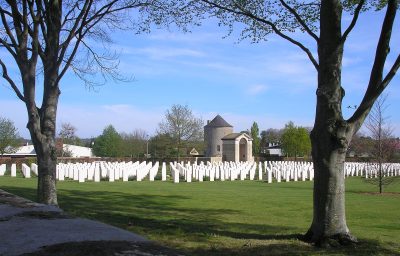
Ranville War Cemetery
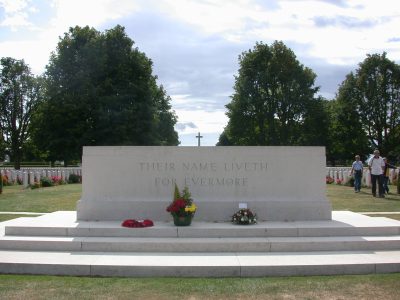
Bretteville-sur-Laize Canadian War Cemetery
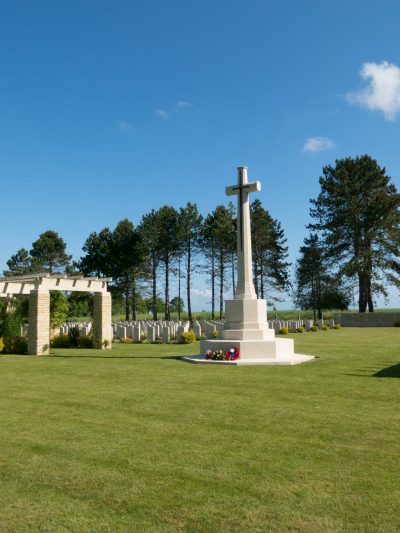
Ryes War Cemetery
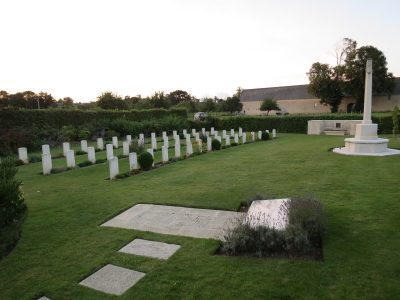
Jerusalem War Cemetery
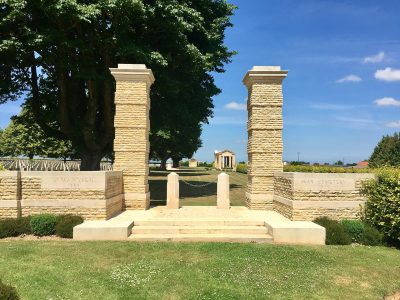
Saint-Manvieu War Cemetery
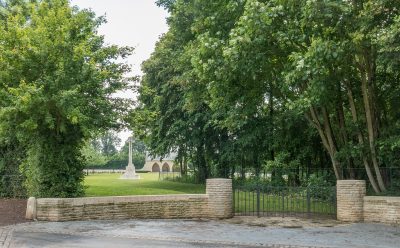
Hermanville War Cemetery
Normandy American Cemetery
War Cemeteries
La Cambe German War Cemetery
War Cemeteries
Bény-sur-Mer Canadian War Cemetery
War Cemeteries
Bayeux War Cemetery
War Cemeteries
Show all 10 Show less
Ranville War Cemetery
War Cemeteries
Bretteville-sur-Laize Canadian War Cemetery
War Cemeteries
Ryes War Cemetery
War Cemeteries
Jerusalem War Cemetery
War Cemeteries
Saint-Manvieu War Cemetery
War Cemeteries
Hermanville War Cemetery
War Cemeteries