Caen
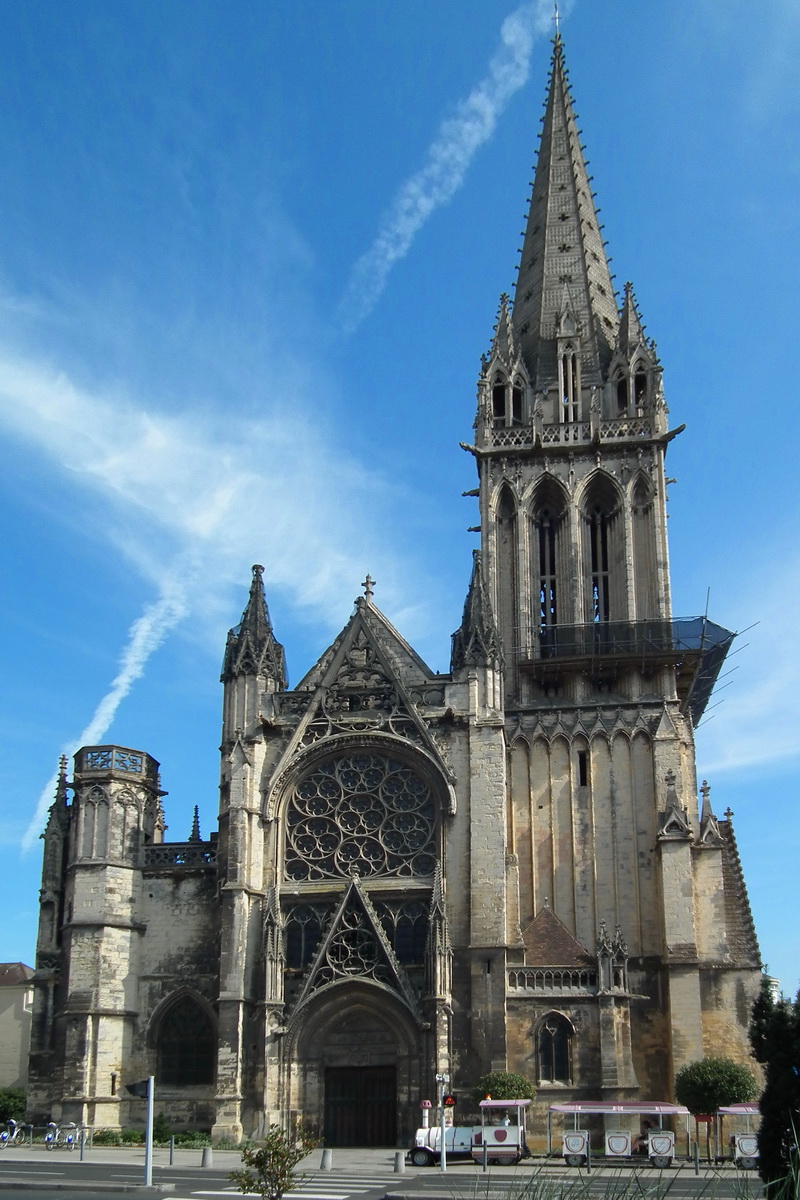
A D-Day objective that held out for weeks, Caen was largely destroyed in the fighting and bombing before its liberation in July 1944. Rebuilt around William the Conqueror's great abbeys, which sheltered thousands of civilians, it is the historic capital of Lower Normandy.
Nine miles inland from Sword Beach, Caen was meant to fall on the first day. British troops of the 3rd Infantry Division came ashore on 6 June with the city marked as their D-Day objective, but German armour held the approaches and what planners imagined as a single afternoon's advance became a grinding battle of almost six weeks. By the time the last German troops withdrew across the Orne in mid-August, the medieval capital of Lower Normandy lay in ruins.
The battle for the city
Caen sat astride the Orne and its canal, at the meeting point of roads and railways that both sides needed. That made it one of the most bitterly contested places in the whole campaign. The Germans held it street by street, and the Allies turned to overwhelming firepower to dislodge them. On the evening of 7 July, hundreds of RAF heavy bombers dropped some two thousand tons of bombs on the northern city, the prelude to Operation Charnwood. Anglo-Canadian infantry fought into the rubble the next day, and by 9 July the northern half of Caen was in Allied hands. The rest held out longer: the districts south of the river were only cleared during Operation Goodwood and its Canadian counterpart, Atlantic, in the third week of July.
The cost fell hardest on civilians. The first raids on 6 and 7 June killed hundreds of residents in their homes, and by the time the fighting ended more than two thousand people of Caen had died in the effort to free them. Perhaps seventy percent of the city was destroyed. A third of the population fled south, where many thousands sheltered for weeks in the old stone quarry tunnels beneath the plateau.
The abbeys that became sanctuaries
The survival of anyone at all owes much to two great Romanesque churches founded by William the Conqueror. As the bombs fell, thousands of civilians crowded into the Abbaye aux Hommes and the neighbouring Lycée Malherbe, which the Red Cross and local volunteers turned into a vast refuge and hospital. At its height close to ten thousand people were sheltering there. Enormous red crosses were painted on the roofs and courtyards to warn Allied airmen, and the Resistance sent word through the lines asking that the district be spared. The bombers largely obliged, and the abbey came through the battle almost untouched. When the troops arrived, refugees and soldiers marked the moment by singing the Marseillaise, forbidden under occupation since 1940.
What to see today
Caen was rebuilt over fourteen postwar years, much of it in the pale local limestone, so the centre feels more modern than a typical Norman town. The great survivors are what to seek out. The Abbaye aux Hommes, the abbey church of Saint-Étienne, still holds the tomb of William the Conqueror before its high altar, marked by a single slab; his remains were scattered by iconoclasts centuries ago, and only a thighbone was ever recovered. Across the city, its sister foundation the Abbaye aux Dames, the church of Sainte-Trinité, makes the pair. Between them rises the château, one of the largest medieval fortress enclosures in Europe, whose ramparts you can walk. Look also for the flamboyant church of Saint-Pierre and the handful of timber-framed houses near the castle that outlasted the bombing.
North of the centre, the Mémorial de Caen, opened in 1988, is among France's finest museums of the war and of the search for peace. It stands, fittingly, above the buried command post of the German general who directed the coastal defences on D-Day. Give it a half-day; it makes sense of everything you will see on the beaches to the north.
Practical notes
Caen is easy to reach and awkward to park in. The A13 and the N13 both feed onto a ring road, from which the centre is signposted, and the sensible move is to leave the car in one of the underground car parks near the château or the Saint-Pierre quarter and walk from there. Everything in the old centre is within about twenty minutes on foot, and the tram runs north to south through it if legs give out.
Allow a full day if you want the abbeys, the castle enclosure and a museum. Half a day covers the two abbey churches and the château ramparts at a reasonable pace. The churches are free to enter; the castle grounds are open access, with the museums inside them ticketed separately.
Underfoot the rebuilt centre is level and well paved, and the abbey interiors are step-free or nearly so, which makes them manageable with a wheelchair or a pushchair. The château is the harder proposition: the approach ramps are steep, the rampart walk is uneven and in places reached by stairs, and the cobbles around the gates are rough going. For a day out of the city, Ardenne Abbey lies just to the north-west and Pegasus Bridge about twenty minutes north-east.
More in the Caen and the Bocage sector
View on mapD-Day Museums (2) · Memorials & Monuments (2) · Liberation Villages (7) · War Cemeteries (2) · Key Sites & Landmarks (1)
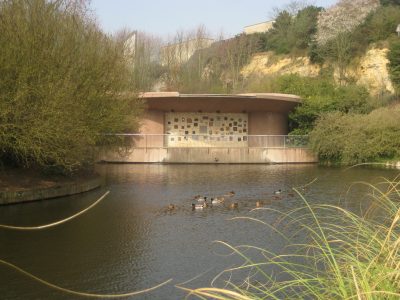
Mémorial de Caen
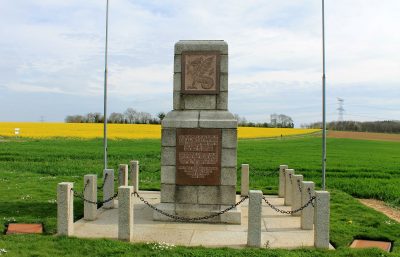
Hill 112
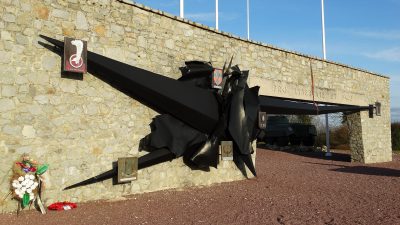
Montormel Memorial
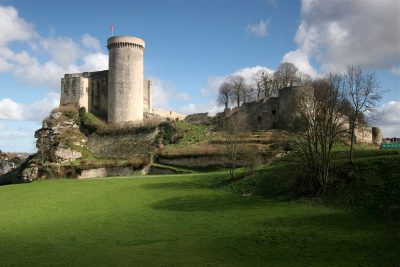
Falaise
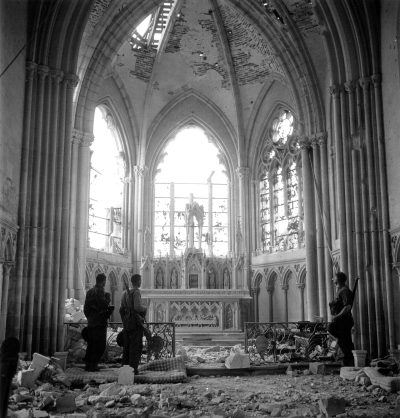
Carpiquet
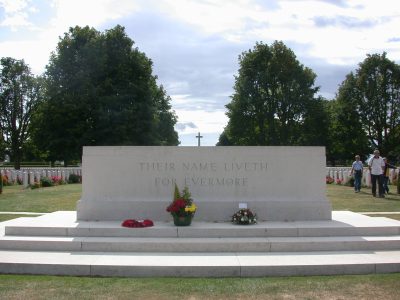
Bretteville-sur-Laize Canadian War Cemetery
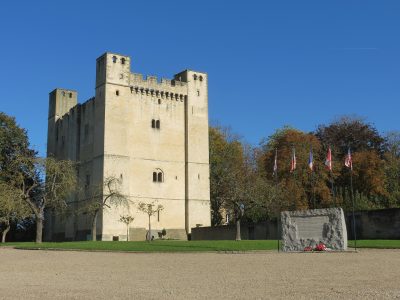
Chambois
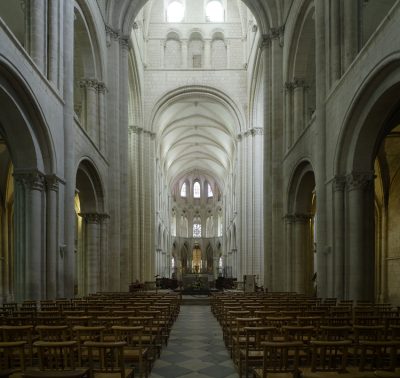
Abbaye aux Hommes
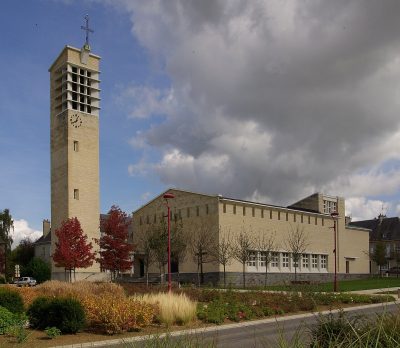
Villers-Bocage
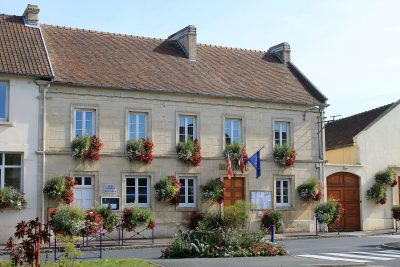
Authie
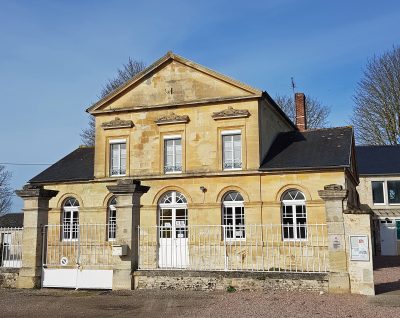
Trun
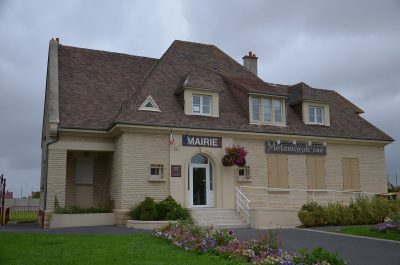
Bourguébus
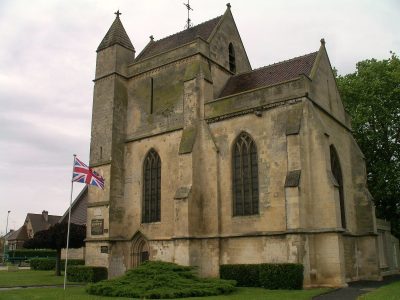
Cagny
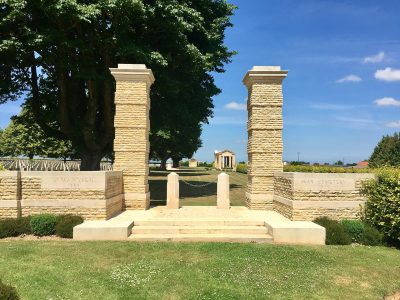
Saint-Manvieu War Cemetery
Mémorial de Caen
D-Day Museums
Hill 112
Memorials & Monuments
Montormel Memorial
D-Day Museums
Falaise
Liberation Villages
Show all 14 Show less
Carpiquet
Liberation Villages
Bretteville-sur-Laize Canadian War Cemetery
War Cemeteries
Chambois
Liberation Villages
Abbaye aux Hommes
Key Sites & Landmarks
Villers-Bocage
Liberation Villages
Authie
Memorials & Monuments
Trun
Liberation Villages
Bourguébus
Liberation Villages
Cagny
Liberation Villages
Saint-Manvieu War Cemetery
War Cemeteries