Trun
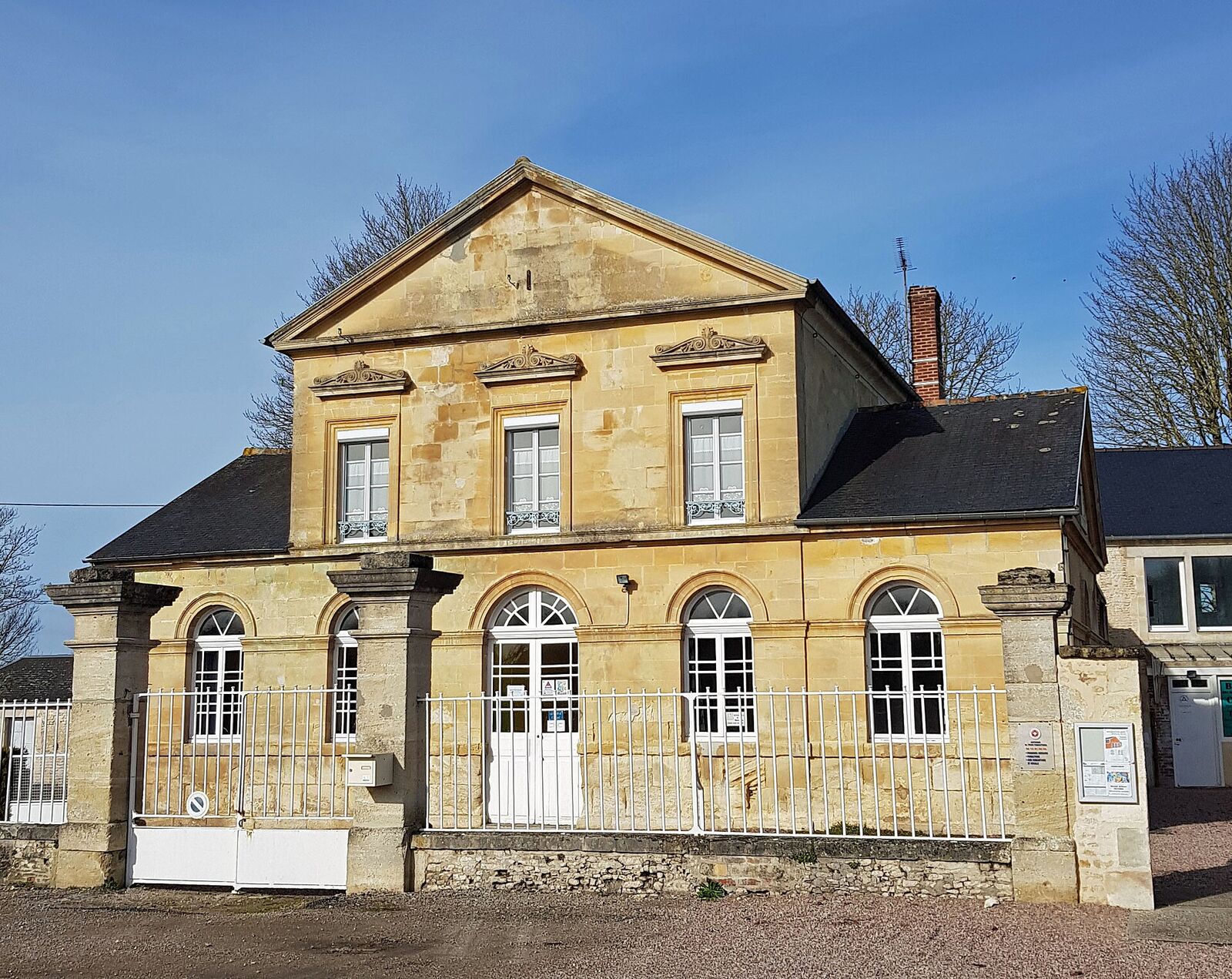
A small town at the mouth of the Falaise Pocket, fought through by Canadian and Polish forces in mid-August 1944 as they squeezed the corridor through which the encircled German armies were trying to escape.
Trun is an easy place to drive through without stopping. It is a quiet market town on the little River Dives, rebuilt in plain post-war stone, with a plastic model-kit factory on its edge and about a thousand inhabitants. Yet for a few days in August 1944 this was one of the most contested points in Normandy: the hinge on which the Falaise Pocket swung shut, and the jumping-off point for the action that earned the only Victoria Cross of the entire Normandy campaign.
The neck of the pocket
By mid-August 1944 two German armies were being squeezed into a shrinking bag of countryside east of Falaise, with the Allies closing from north, south and west. The one remaining escape route ran east across the Dives valley through a narrowing gap between Trun and the village of Chambois. Hold that gap, and tens of thousands of German troops would be trapped; leave it open, and they would slip away toward the Seine.
Trun paid for its position. The Allies had first bombed the town in June 1944 to slow German reinforcements moving up to the invasion beaches, and in mid-August the raids returned in force. By the time the 4th Canadian Armoured Division took the town on 18 August, roughly seventy percent of it lay in ruins, with hundreds of buildings destroyed or damaged. Amid the wreckage, Trun also became a gathering point for civilians: a reception centre here took in great numbers of Normans fleeing the fighting that was tearing their countryside apart.
The bridge at Saint-Lambert
The sharpest fighting was not in Trun itself but two miles south, at Saint-Lambert-sur-Dives, where a stone bridge over the Dives carried one of the last roads out of the pocket. On 18 August, Major David Currie of the South Alberta Regiment was ordered out from Trun with a small mixed force of Sherman tanks and Canadian infantry to take and hold the village. For three days his men fought off repeated German attempts to break through, often at point-blank range, until the corridor was effectively choked. Currie was awarded the Victoria Cross, the only one given in the Normandy campaign.
There is an extraordinary footnote. An army photographer captured Currie during the battle, pistol in hand, accepting the surrender of German soldiers behind him. It is often described as the only photograph ever taken of a man in the very act of performing the deed that won him the Victoria Cross.
What to see today
Trun makes a natural base for touring the closing of the pocket, and the ground itself is the main exhibit. The country lanes running east toward Chambois follow the line of the German escape, and the low ridges and river crossings that decided the battle are easy to read once you know what happened here.
The essential short trip is south to Saint-Lambert-sur-Dives. The old stone bridge Currie fought for still stands, and above the village the Belvédère des Canadiens, a hilltop lookout with interpretive panels, lays out the battlefield below and explains the roles of the Canadian, Polish, American and French units. A little further on, the Montormel memorial crowns Hill 262, where Polish forces held the high ground as the pocket was sealed on 21 August.
In Trun, take a moment to notice the town's uniform, sober rebuilding for what it says: this is not a place that survived the war so much as one that was made anew after it. Look for the small commemorative plaques marking the liberation and the civilians who sheltered here. The quiet is the point. What is now a placid farming valley was, for one August week, the killing ground where the Battle of Normandy ended.
Practical notes
Trun is on the D916 between Falaise and Vimoutiers, well inland from the beaches and a good hour's drive from the coast. Park in the town square and walk; for Saint-Lambert-sur-Dives take the D13 south for a couple of miles, where there is roadside space near the bridge and a small car park at the Belvédère des Canadiens above the village. The bridge, the belvedere and the town's plaques are open access and free; the memorial at Montormel is ticketed.
Allow half a day for the whole loop - an hour in and around Trun, an hour at Saint-Lambert and the belvedere, and a good hour and a half at Montormel, which is where the geography finally makes sense.
Trun and the lanes are level and easy, and the belvedere has a surfaced approach and a viewing terrace that a wheelchair or a pushchair can manage; the field paths down towards the Dives are rough, often muddy, and cross working farmland. The natural pairing is Montormel Memorial on the ridge above the valley, with Chambois and its keep at the far end of the gap.