Sword Beach
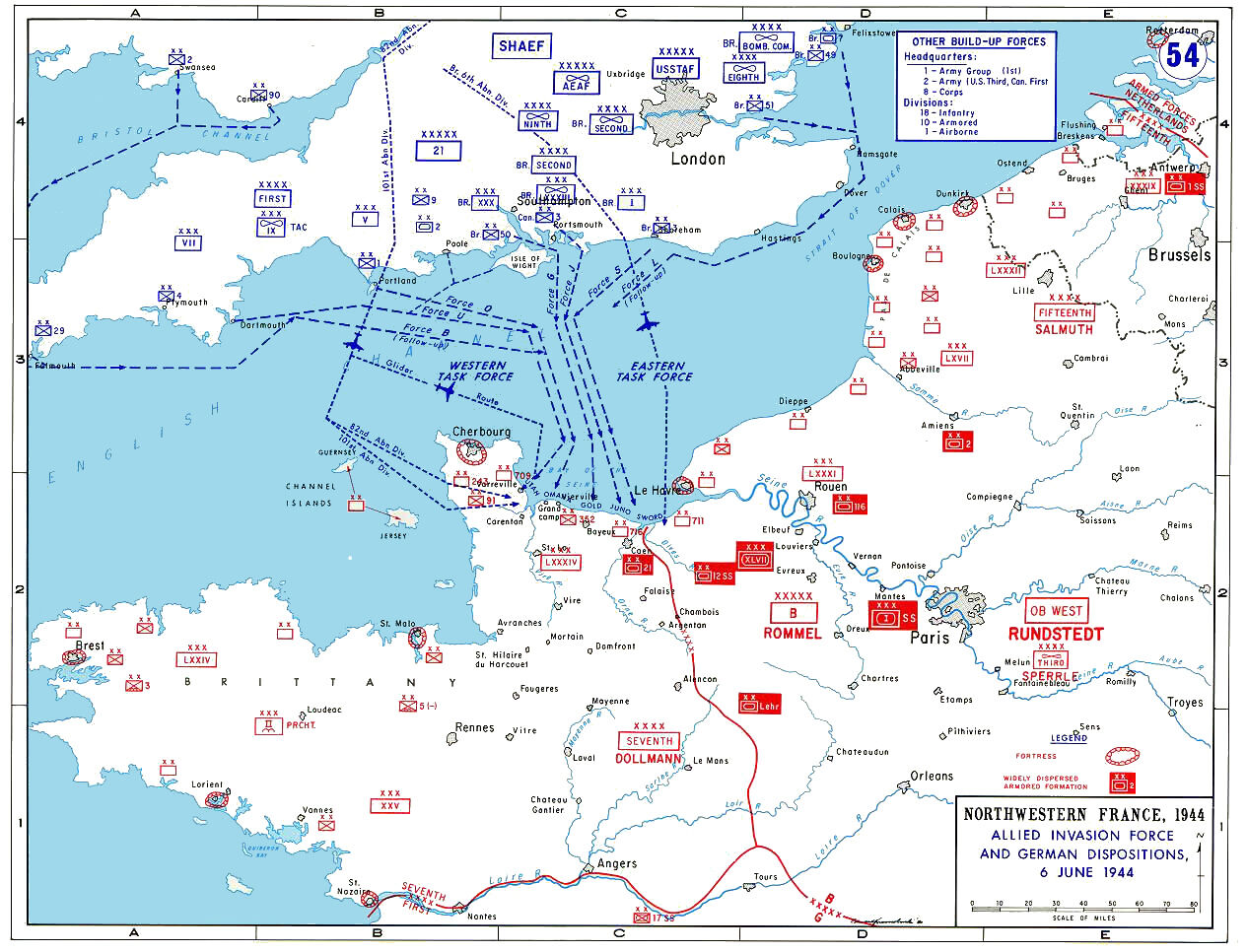
The easternmost landing beach, taken by the British 3rd Division with French commandos of the Kieffer unit among the first ashore. The drive on Caen from Sword fell short on D-Day, but the beach linked up with the airborne troops holding the Orne bridges.
Of the five D-Day beaches, Sword was the closest to the prize that eluded the Allies longest: Caen, barely nine miles inland. It was also the only beach where French soldiers came ashore in their own country on 6 June 1944, and the one where the seaborne and airborne halves of the invasion were meant to meet. On a clear day you can stand at Ouistreham and take in the whole story at once - the flat, exposed sand, the seafront villas the Germans fortified, and the low ground running south toward a city that would not fall for another five weeks.
What happened here
Sword ran roughly five miles from Saint-Aubin to Ouistreham, but the assault funnelled onto a narrow frontage code-named Queen, opposite Hermanville-sur-Mer. The British 3rd Infantry Division led the landing, with amphibious DD tanks meant to swim ashore ahead of the infantry. The beach itself was taken relatively quickly, but the plan unravelled inland. The single narrow strip of firm sand became a bottleneck as the tide rose and traffic backed up, and the drive on Caen stalled against stiffening resistance short of the city.
The most storied landing here belongs to the French. Some 177 marines of Commandant Philippe Kieffer's troop - attached to the British No. 4 Commando, the only French unit to land in Normandy that day - came ashore near Ouistreham and fought their way to the casino strongpoint at Riva-Bella, a fortified position built where the town's belle-époque casino had stood. Ten of Kieffer's men were killed on 6 June. Alongside them landed Lord Lovat's commandos, with piper Bill Millin playing the bagpipes along the waterline as men fell around him - an act his commander requested and the regulations forbade.
By early afternoon the commandos had pushed east and linked up with the airborne troops holding the bridges over the Orne and the Caen Canal, joining the two invasions as intended. That same afternoon brought the only major German armoured counterattack of the day: the 21st Panzer Division drove north and a handful of its tanks reached the coast in the gap between Sword and Juno, near Lion-sur-Mer, before naval gunfire and hardening defences forced them back.
What to see today
Ouistreham is the anchor. On the seafront stands La Flamme, the Kieffer memorial - a soaring flame-shaped sculpture mounted on a German cupola. Walk the base and read the stones: they carry the names of the French commandos, with steps counting the men lost between the beach and the casino. A short stroll away, the compact No. 4 Commando Museum, founded by the veterans themselves, tells the French story in uniforms, film and artefacts, and nearby the Grand Bunker - the German naval command post - survives as a museum you can climb through floor by floor for the gunner's-eye view out to sea.
West along the coast road at Colleville-Montgomery, look for the statue of Bill Millin, pipes at his side, at the Place du Débarquement, and a statue of Montgomery himself, who gave the commune its double-barrelled name. Inland at Hermanville-sur-Mer a Cromwell tank stands by the road, and the Commonwealth war cemetery holds more than a thousand graves - a quiet, walled place worth the detour to grasp the human cost behind the day's mixed outcome. At Lion-sur-Mer a Churchill AVRE, the specialised Royal Engineers tank, marks the western edge of the beach near the point the panzers reached.
Stand on the promenade and orient yourself: the sea at your back, the flat sand where the tide governed everything, and the gentle slope inland toward Caen. Sword was a success at the water's edge and a disappointment beyond it, and the ground still explains why - there was simply too little room, and too much distance, to do everything the plan asked in a single June day.
Practical notes
Ouistreham is the place to start, and the D514 coast road strings the whole beach together from there westward through Colleville-Montgomery, Hermanville and Lion-sur-Mer. There is parking along the seafront and near the ferry terminal, with further car parks at each of the smaller resorts, so the simplest approach is to drive the coast road and stop at the memorials rather than hunt for one central spot. The beach itself is open access and free; the museums along it are ticketed.
Allow half a day to take in Ouistreham and the western monuments properly, or a couple of hours if you only want the Kieffer memorial and a walk on the sand.
The seafront promenade is paved, flat and easy with a wheelchair or a pushchair, and much of the beach can be seen from it. The sand above the tide line is soft going, and the bunkers are a different matter: the Grand Bunker is climbed floor by floor on steep concrete stairs, with no lift and no way round them. If you carry on east, the airborne story continues a short drive inland at Pegasus Bridge and the crossings over the Orne, ten minutes away and an easy addition to the same day.
More in the Sword Beach sector
View on mapAirborne & Drop Zones (1) · Atlantic Wall Batteries (2) · War Cemeteries (2) · Liberation Villages (6) · Key Sites & Landmarks (1) · Memorials & Monuments (2)
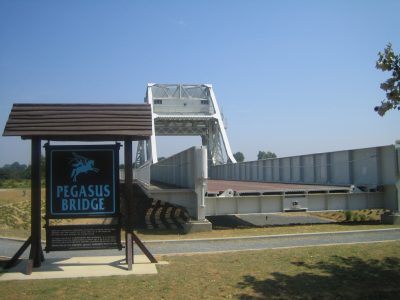
Pegasus Bridge
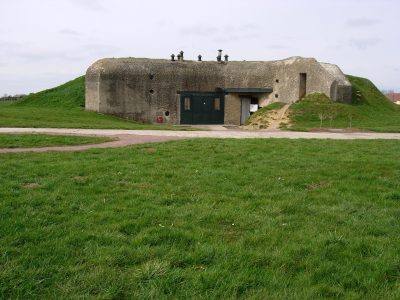
Merville Gun Battery
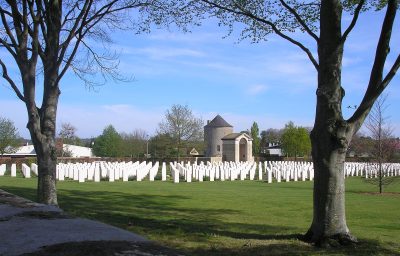
Ranville War Cemetery
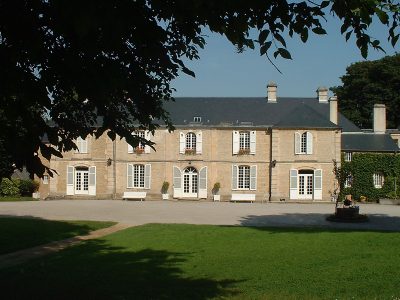
Ranville
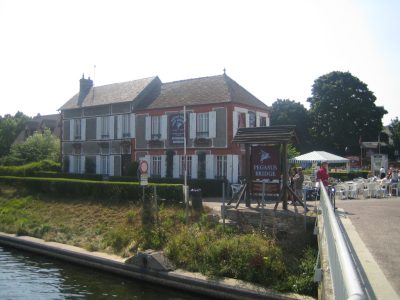
Café Gondrée
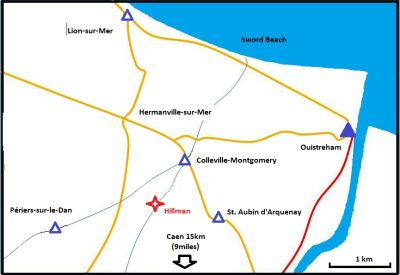
Hillman Fortress
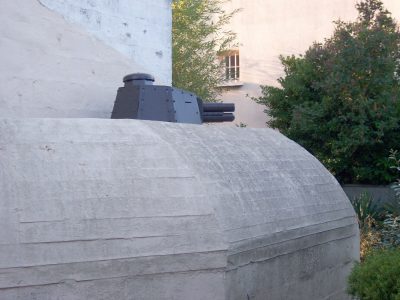
Ouistreham
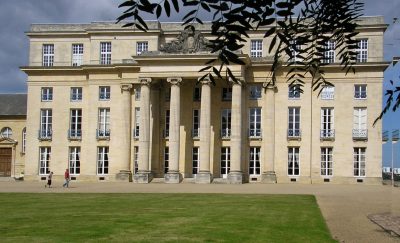
Bénouville
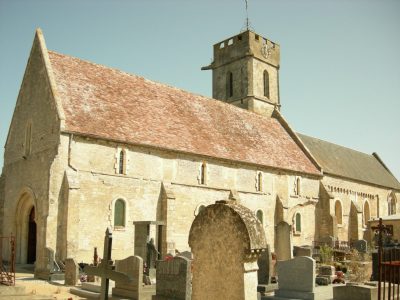
Colleville-Montgomery
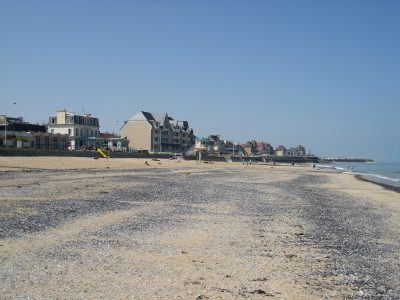
Lion-sur-Mer
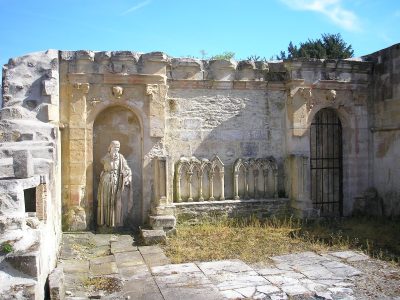
Bréville-les-Monts
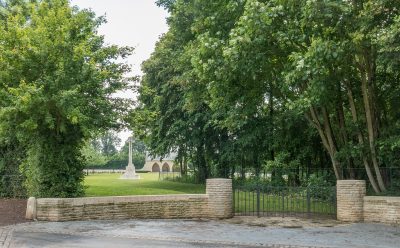
Hermanville War Cemetery
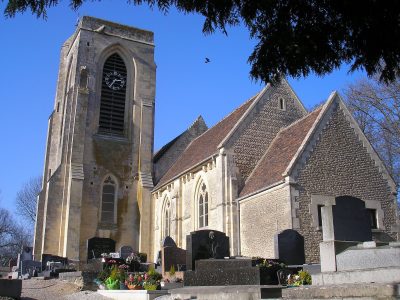
Cambes-en-Plaine
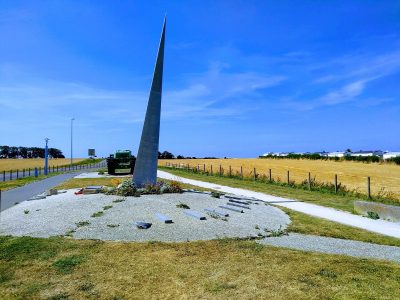
Monument de la Liberté
Pegasus Bridge
Airborne & Drop Zones
Merville Gun Battery
Atlantic Wall Batteries
Ranville War Cemetery
War Cemeteries
Ranville
Liberation Villages
Show all 14 Show less
Café Gondrée
Key Sites & Landmarks
Hillman Fortress
Atlantic Wall Batteries
Ouistreham
Liberation Villages
Bénouville
Liberation Villages
Colleville-Montgomery
Liberation Villages
Lion-sur-Mer
Liberation Villages
Bréville-les-Monts
Memorials & Monuments
Hermanville War Cemetery
War Cemeteries
Cambes-en-Plaine
Liberation Villages
Monument de la Liberté
Memorials & Monuments