Bénouville
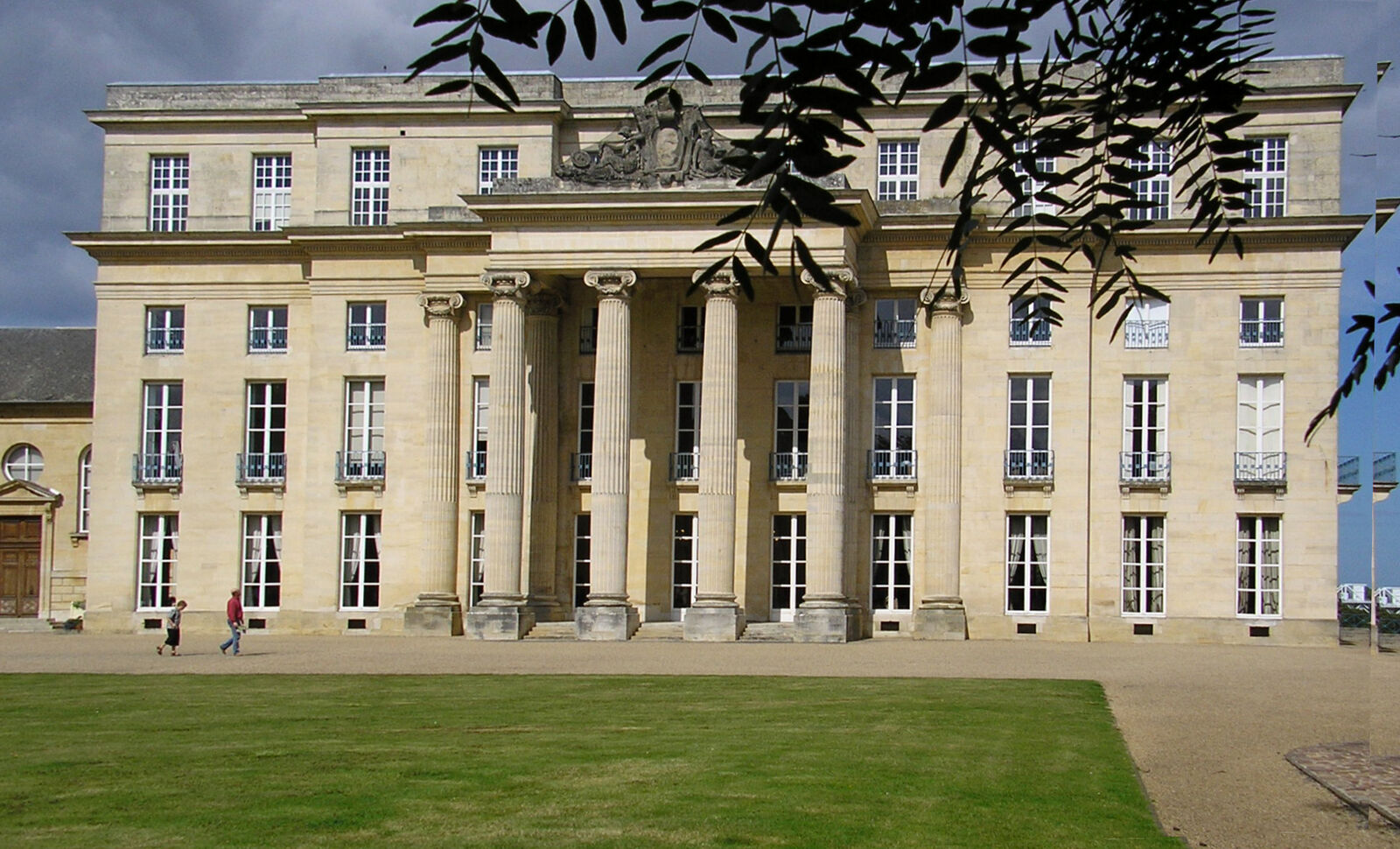
A village on the Caen Canal immediately west of Pegasus Bridge, among the first communities in France to be liberated in the early hours of D-Day. Its château served as a maternity hospital whose staff sheltered and aided the Resistance throughout the occupation.
Bénouville strings itself along the west bank of the Caen Canal, an ordinary Norman village of stone houses and a church that happened to sit at the hinge of the whole eastern flank of the invasion. Whoever held the canal bridge here held the door between the German garrison at Caen and the beaches to the north. In the first minutes of 6 June 1944 that door was slammed shut, and Bénouville found itself liberated before most of France had any idea the landings had begun.
The night the bridge fell
Shortly after midnight, three Horsa gliders came down out of the dark and skidded to a halt within yards of the canal bridge, a feat of navigation that has few equals in the war. The glider infantry aboard, men of the Oxfordshire and Buckinghamshire Light Infantry under Major John Howard, stormed the bridge in a matter of minutes. It was renamed Pegasus Bridge for the winged-horse badge of the British airborne, while the neighbouring crossing of the Orne became Horsa Bridge.
Taking the bridge was one thing; holding it was another. Through the short summer night and the long day that followed, the lightly armed airborne troops and the paratroopers who reinforced them dug in around Bénouville and beat off German counterattacks probing up from Caen, waiting for the seaborne army to reach them. Relief came around midday when the commandos who had landed on Sword Beach marched inland and crossed the bridge to the sound of a bagpipe. The first British soldier to be killed in the assault fell here at the bridge; he lies today in the churchyard at neighbouring Ranville, where a memorial stone marks him.
The château and its secret war
On the southern edge of the village stands one of the finest neoclassical buildings in Normandy, the Château de Bénouville, designed in the 1770s by Claude-Nicolas Ledoux and famous for a monumental staircase rising beneath a coffered ceiling. By 1944 it was no longer a private house but a maternity hospital run by the department of Calvados, and its director had turned it into something more.
Under Madame Léa Vion the maternity home became a working cell of the Resistance. Behind the routine of a hospital full of expectant mothers, she sheltered shot-down Allied airmen and young Frenchmen dodging forced labour in Germany, and weapons and a clandestine radio were hidden on the premises. After the war she served for several years as the village's mayor. The building's double life produced one of D-Day's odder incidents: at first light on 6 June a soldier of Howard's company opened fire on the château roof, convinced enemy snipers were up there, until Howard ordered him to stop, mindful that there were women in labour inside the walls.
What to see today
A modern bridge now spans the canal, but the original 1934 Pegasus Bridge has been preserved a short walk away at the Mémorial Pegasus, which tells the story of the coup de main and the airborne landings with the gliders, weapons and personal effects of the men who fought here. On the west bank, at the corner nearest the bridge, stands the Café Gondrée, long celebrated as the first house in France to be liberated. The Gondrée family passed intelligence about the bridge to the Resistance before the invasion; the café is still run by their daughter, who was a small child in 1944, and remains a working café rather than a museum, its walls hung with photographs and memorabilia. Look for the markers in the fields beside the water showing where each glider came to rest. The Château de Bénouville, restored and now a centre for gardens and landscape, can be admired from its grounds at the far end of the village.
Practical notes
Bénouville sits on the D514 between Caen and Ouistreham, and everything that matters is strung along a single kilometre of that road. Park on the eastern bank beside the Mémorial Pegasus, or in the spaces near the café on the western side; the château at the southern end of the village has its own approach and grounds. The bridge, the glider markers and the memorials by the water are free and open access, and the museum is ticketed.
An hour and a half is comfortable for the bridge, the markers and a drink at the café, or half a day if you take in the museum and then walk south through the village to the château. Doing it on foot rather than driving between the two ends is much the better way to feel how small the ground was.
The village is flat throughout, with pavements, tarmac and firm level paths on both banks, so this is one of the easier stops in Normandy for a wheelchair or a pushchair; the canal towpath is level too, though the grass verges soften after rain. Just up the road, the war cemetery at Ranville holds many of the airborne dead and takes half an hour, and the concrete warren of Hillman Fortress is a short drive north-west if you want the other side of the same day.