Colleville-Montgomery
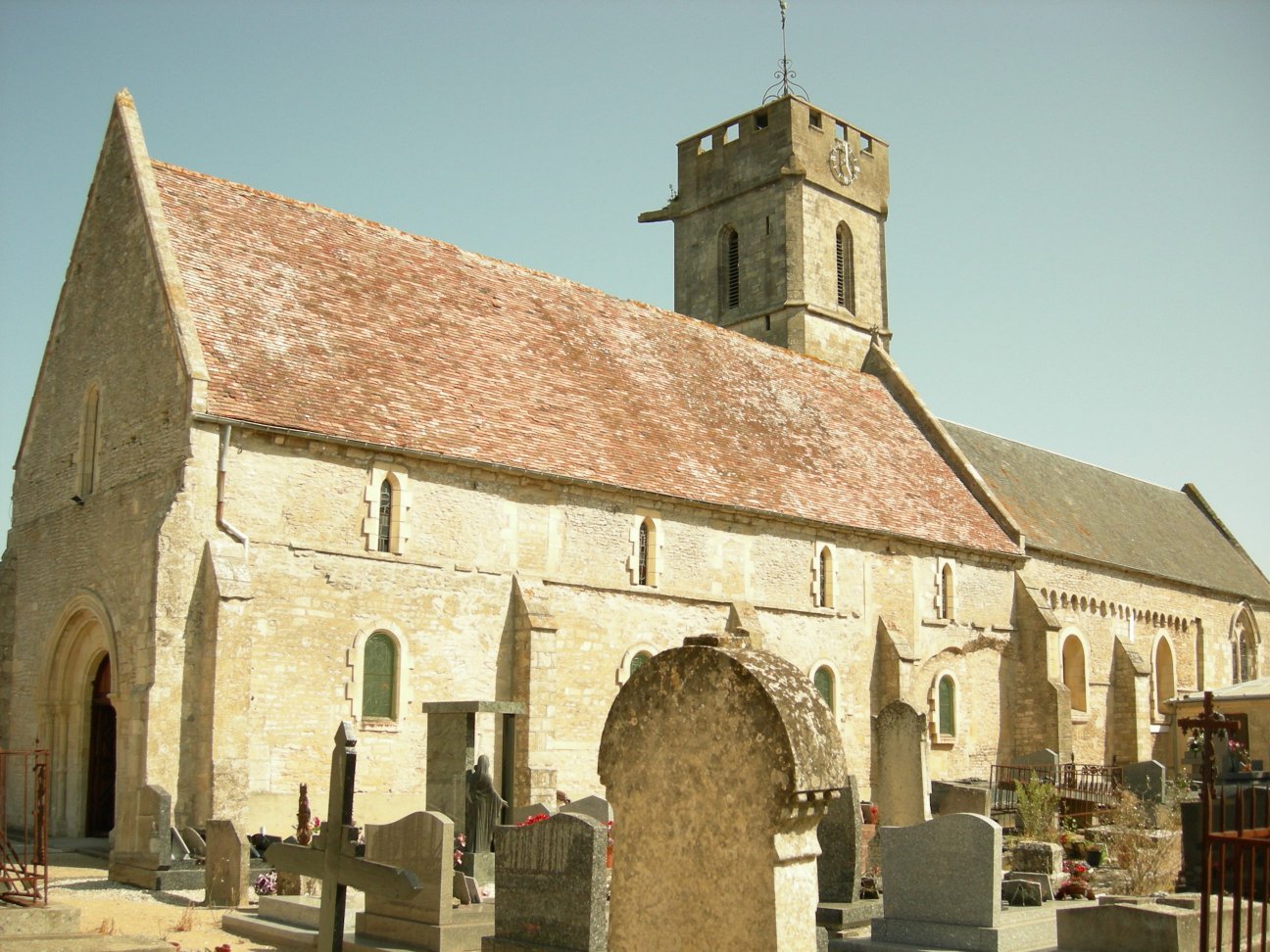
A coastal village behind Sword Beach, renamed after the war in honour of Field Marshal Montgomery. British infantry and commandos pushed inland through here on D-Day, past the German strongpoint codenamed Morris, on the road toward Caen.
Most visitors racing between the Sword Beach seafront and Pegasus Bridge pass straight through Colleville-Montgomery without stopping. That is a mistake. This quiet commune holds two of the most instructive positions on the entire British landing front: the seafront where a kilted piper walked into legend, and, a mile inland, the vast concrete headquarters that arguably cost the Allies the city of Caen on the first day.
The village that took a general's name
Before the war this was plain Colleville-sur-Orne. In 1946 the commune added the name of Field Marshal Bernard Montgomery, who had commanded the Allied land forces in the Battle of Normandy - a rare honour, and one that also neatly distinguished the village from the other Colleville behind Omaha Beach. There is a pleasing historical echo in the choice: Montgomery's Norman ancestors are said to have crossed with William the Conqueror in 1066, and villages near Lisieux still carry the family name.
Morris and Hillman
Two German strongpoints sat astride the village. The first, codenamed Morris by Allied planners, was a battery of four ex-Czech 100mm guns in casemates west of the village; it fell relatively quickly on D-Day. The second was a different problem entirely. Codenamed Hillman, it was a sprawling 24-hectare complex of some eighteen bunkers on the Périers ridge, dug into high ground with clear views down to the beaches. It served as the regimental headquarters of the 736th Grenadier Regiment, held by around 150 men under Colonel Ludwig Krug.
The task of taking it fell to the 1st Battalion, the Suffolk Regiment, under Lieutenant-Colonel Richard Goodwin, supported by tanks. The assault was slow and costly. Early infantry rushes were driven back by machine-gun fire; the Suffolks' company commander leading the artillery direction, Captain Geff Ryley, was killed. Shells from the Sherman Fireflies simply bounced off Hillman's armoured observation cupolas. Only after hours of grinding, wire-cutting and close assault was the position largely secured, and the last bunker did not surrender until the following morning. Historians have argued that the delay here helped prevent the 3rd Infantry Division from reaching Caen on 6 June, as the plan had demanded.
What to see today
Hillman is the reason to come. Now cared for by the volunteers of Les Amis du Suffolk Regiment, the site is open to walk, with guided visits in summer. Do not expect a polished museum; expect the real thing. You can climb over the grassy earthworks, follow the line of the trenches, and enter Colonel Krug's command post. Look for the two great steel observation cupolas set into the command bunkers - pause at the scars and gouges on the armour and remember the Fireflies whose shots glanced off them. Standing here, with the ground falling away toward the sea, it is instantly obvious why the defenders held on and why the Suffolks had such a hard afternoon. A memorial to the regiment stands on the ground it took.
Down on the seafront, opposite the Queen Red sector where the commandos came ashore, is a bronze statue unveiled in 2013 of Piper Bill Millin, Lord Lovat's personal piper. Aged twenty-one, armed only with his pipes and a dagger in his sock, he strode the beach and the roads inland playing the bagpipes while men fell around him. Lovat's commandos pushed through Colleville that morning on their way to relieve the airborne troops holding the Orne bridges. The plinth carries Millin's own words: if people remember the piper, they will not forget the men who fell on the beaches. Between the two sites, you have the whole shape of Sword Beach in a single village.
Practical notes
The village lies just inland from the D514 coast road, and the two halves of the visit need two stops. For the piper, follow the seafront road and use the parking along the promenade near the statue. For the fort, turn inland and follow the signs to the Rue du Suffolk Régiment, where there is a car park at the entrance to the site. Both are open access and free, though the interior of the command bunker is opened by the volunteers rather than left unlocked.
Allow around an hour and a half in total: a good hour walking the fort, which is far bigger than it looks from the gate, and twenty minutes or so on the seafront. Taken together they make a satisfying half-day with the coast road.
The seafront is easy going, with a level paved promenade right up to the statue, fine for a wheelchair or a pushchair. The fort is the opposite: mown grass and farm track over open, gently sloping ground, with earthworks to climb, uneven concrete aprons and steps down into the bunkers. It gets muddy after rain and there is no shelter. Nearby, Hermanville War Cemetery is minutes away and holds many of the men who fell on this stretch of front, and Ouistreham along the coast gives you the commando story and somewhere to eat.