Ouistreham
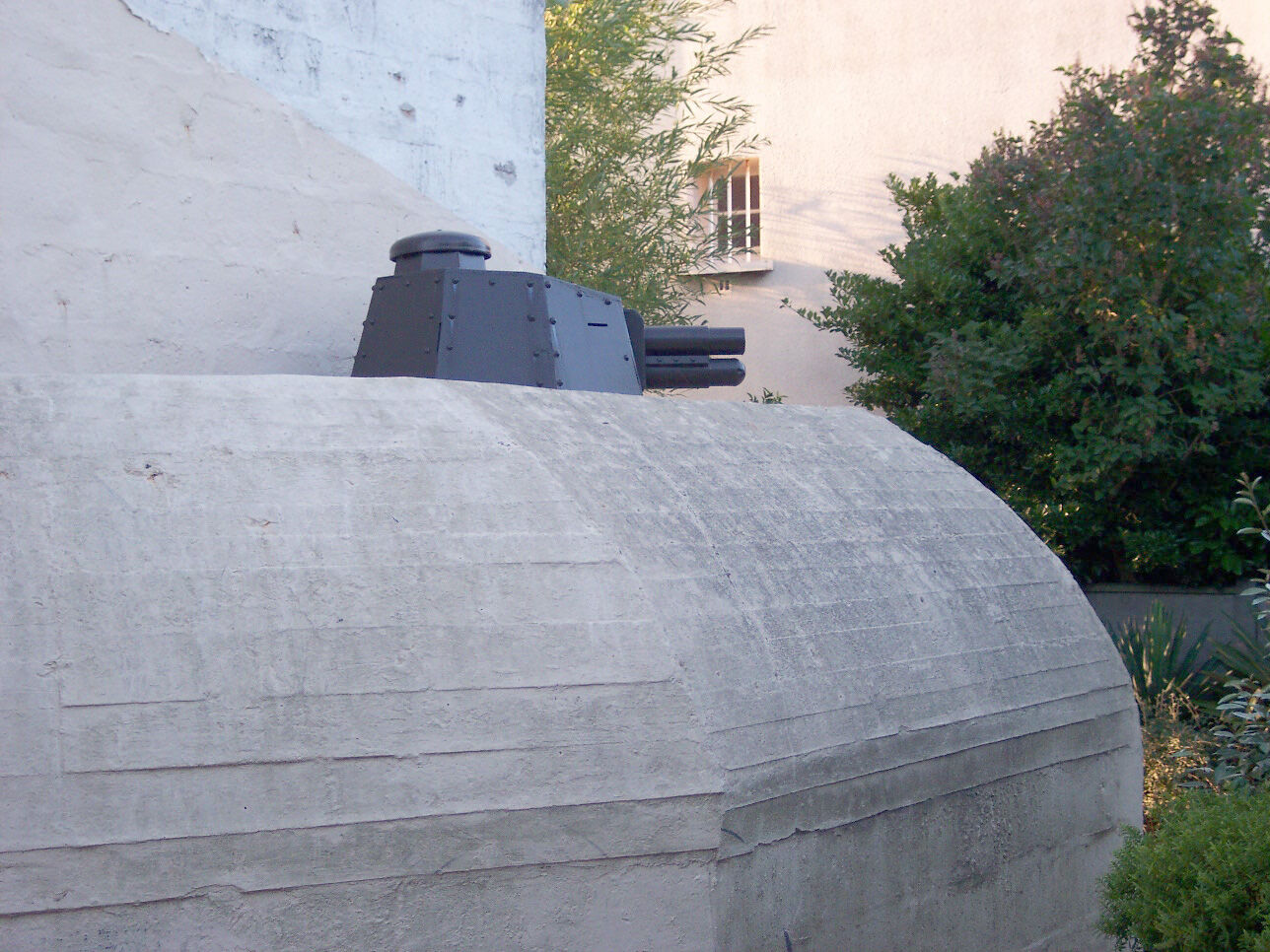
A ferry port at the mouth of the Orne and the eastern end of Sword Beach, where French commandos landed on D-Day. Its Grand Bunker, a former German rangefinder tower, is now the Atlantic Wall Museum.
Ouistreham sits where the River Orne meets the sea, the eastern hinge of the whole Normandy invasion front. Today it is two places at once: a working ferry port with boats to Portsmouth, and Riva-Bella, the villa-lined seaside resort behind the dunes. Beneath the holiday veneer, this is the one stretch of the D-Day coast where Frenchmen came ashore to liberate their own soil, and the fighting here left marks that a visitor can still trace street by street.
The French came home here
At about 7:25 on the morning of 6 June 1944, roughly 177 French marine commandos led by Commandant Philippe Kieffer waded onto Sword Beach at Riva-Bella. They were the only French unit to land in Normandy that day, attached to the British No. 4 Commando within Lord Lovat's brigade. Many had escaped occupied France by any route they could find and trained in the Scottish Highlands; now they were fighting through streets some of them knew by name.
Their objectives were precise: silence the German strongpoint at the old casino, then push inland to link up with the airborne troops holding the bridges over the Orne and its canal. The Germans had demolished Ouistreham's belle-époque casino and poured a concrete strongpoint on its footprint, bristling with machine guns. With the help of a British tank that worked its way forward, the commandos overran the position not long after 9 a.m. It was costly work: around ten of Kieffer's men were killed on the beach and in the town that day, with dozens more wounded.
The bunker that held out
The tall grey tower a short walk from the seafront is the Grand Bunker, a German fire-control post that rose some seventeen metres above the surrounding villas. From its top the garrison directed the coastal batteries guarding the mouth of the Orne. The commandos could take the casino, but this armoured tower shrugged off their first attempts, its defenders hurling grenades from the roof.
It did not fall on D-Day at all. Only on 9 June did a small party of Royal Engineers under a young lieutenant, Bob Orrell, set about it, laying explosive charges against the steel door. It reportedly took hours of patient work to blow it open, after which the garrison of two officers and around fifty men surrendered. The tower survived intact, which is precisely why it is worth your time now.
What to see today
The Grand Bunker is now the Atlantic Wall Museum, and it is one of the most complete fortifications open anywhere on the coast. Restored to look as it did on 6 June 1944, its floors unfold as a cross-section of German coastal defence: the generator and air-filtration plant, the ammunition store, the radio and telephone rooms, the dormitory and dressing station, and at the summit the rangefinder position, from which you get the same commanding view over the estuary that made the tower so valuable. Allow time to climb it slowly; the cramped stairs and thick concrete tell you more about the war than any label.
A short walk away, near the seafront, look for the memorial known as La Flamme on Boulevard Aristide Briand, created by the local artist Yvonne Guégan. It carries the names of the 177 marines who landed here, and its steps and rising flame are deliberately composed to honour those who fell between the water and the casino. Opposite the modern casino stands the No. 4 Commando Museum, small but personal, filled with uniforms and equipment given by the commandos' own families.
Stand on the seawall at Riva-Bella and orient yourself: the ferry terminal and lighthouse to your right mark the Orne's mouth; the open sand to your left is Sword Beach, running west toward Lion-sur-Mer. It is an ordinary, breezy resort promenade now, which is rather the point of remembering what it cost.
Practical notes
Ouistreham is straightforward to reach: the D515 dual carriageway runs up from Caen in about twenty minutes, and the D514 follows the coast in from the western beaches. There is plenty of parking along the Riva-Bella seafront and near the Grand Bunker, though it fills in high summer and on ferry days. The beach and the seafront memorials are open access and free; the Grand Bunker and the No. 4 Commando Museum are both ticketed.
Give the town half a day. The Grand Bunker alone takes an hour if you read the rooms properly, the commando museum around forty minutes, and the walk along the seafront to the memorial and back another half hour.
The promenade and the town streets are flat and paved, so the seafront, the memorials and the museum approaches are all easy with a wheelchair or a pushchair, and the sand is soft only above the tideline. The Grand Bunker is the exception and a firm one: its floors are joined by narrow steel staircases with no lift, and the upper levels are unavoidably a climb through tight spaces. From here Pegasus Bridge and the Merville Gun Battery are both within ten to fifteen minutes inland, and make the obvious afternoon.