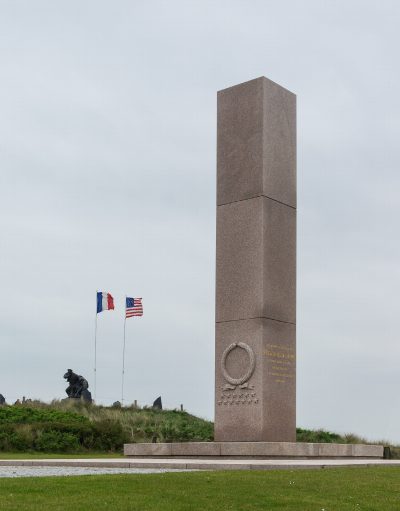
Utah Beach
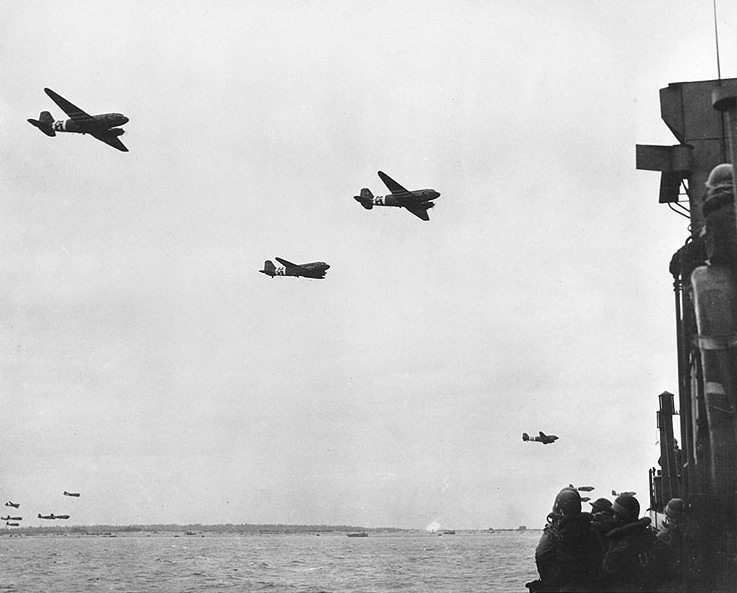
The westernmost of the landing beaches, assaulted by the US 4th Infantry Division. Strong currents pushed the first waves about two kilometres south of their objective - onto a more lightly defended stretch - and the landing proved the least costly of the five. A museum and memorials now line the dunes.
Of the five invasion beaches, Utah was the last to be added to the plan and, in the event, the gentlest introduction to the war. It sits at the base of the Cotentin peninsula, a low shelf of pale sand backing onto dunes and, beyond them, a belt of marshland the Germans had deliberately flooded. Taking this beach was never really about the sand. It was about the four narrow causeways that crossed the drowned fields behind it, and about the two American airborne divisions dropped inland during the night to seize their far ends before dawn.
What happened here
Shortly after first light on 6 June 1944, the assault waves of the US 4th Infantry Division came ashore. Smoke, a strong lateral current, and the loss of control craft carried the first boats roughly two kilometres south of where they were meant to land. It was a lucky error. The stretch they hit was defended by a single strongpoint rather than the heavier positions waiting at the intended sector.
The most quoted figure of the day was already an old man by a soldier's reckoning. Brigadier General Theodore Roosevelt Jr., eldest son of the president, was the only general to land by sea in the first wave. In his mid-fifties, arthritic and leaning on a cane, carrying a pistol, he walked the dunes under fire to find the causeway exits, worked out that the whole division had come in off-target, and reportedly decided to fight from where they stood rather than shift back to the plan. Wave after wave was funnelled inland through the exits he identified. He died of a heart attack barely a month later and is buried at the American cemetery above Omaha, beside a brother killed flying in the First World War.
Because the defences here were thinner and the flooded ground kept German reinforcements at arm's length, Utah proved the least costly of the five landings. The 4th Division's losses on the beach that day numbered in the low hundreds, a fraction of the toll a few kilometres east at Omaha. The real cost of the sector was paid inland, in the hedgerows, by the paratroopers.
What to see today
The beach is still remarkably empty: a broad, quiet sweep of sand and marram grass, easy to walk and easy to imagine. The centrepiece is the Utah Beach Landing Museum, built into and around a surviving German blockhouse on the dune line, so that you stand inside the very position the assault was aimed at. Its hangar holds a fully restored B-26 Marauder, one of only a handful left in the world.
Spread along the dunes outside is one of Normandy's densest clusters of memorials. Look for the US Navy Monument, honouring the sailors and the demolition teams who cleared the obstacle-strewn shallows; a monument to the 90th Infantry Division cut, pointedly, from granite quarried by prisoners at the Flossenbürg concentration camp; and a Higgins-boat memorial recalling the flat-bottomed landing craft, designed by a New Orleans boatbuilder, that carried the infantry ashore. Nearby stands a marker for the Liberty Road, the commemorative route of milestones running from the coast toward Bastogne.
To read the ground properly, stand on the dune with your back to the sea. The flat, reclaimed farmland stretching inland is the old inundation; the small roads crossing it are the descendants of the causeways the airborne fought to hold. A short drive brings you to Sainte-Marie-du-Mont and Sainte-Mère-Église, where those night drops came down, and to the memorials at La Fière. Utah rewards a visitor who understands that the drama did not stop at the waterline but moved inland, into the fields, in the dark hours before the boats even arrived.
Practical notes
The approach is by the D913, which runs from the marshland villages straight out to the dune line and stops at the museum. There is a large car park there, and the beach, the dunes and the whole scatter of memorials outside are open access and free; the museum itself is ticketed.
Allow around two hours: an hour or so inside the museum and the blockhouse, and another wandering the memorials and the sand. Add more if you want to drive the small roads inland and read the flooded ground for yourself, which is really the point of coming here.
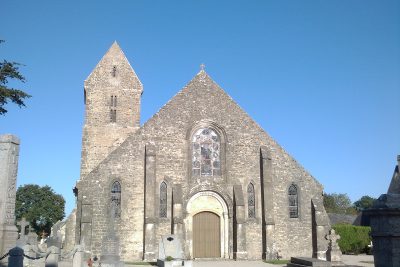
The sand is flat and firm at low tide, and the museum, its terrace and the paths between the nearer monuments are surfaced and level, so the core of the site suits a wheelchair or a pushchair. The dune crests and the softer sand beyond them are harder work, and the whole beach is exposed to the wind off the Channel, so bring a layer more than you think you need. Nearby, the Airborne Museum fills in the night that preceded the landing, and the tiny church at Angoville-au-Plain, where two American medics treated the wounded of both sides, is one of the most affecting stops in the sector.
More in the Utah Beach sector
View on mapLiberation Villages (4) · Atlantic Wall Batteries (2) · Airborne & Drop Zones (3) · D-Day Museums (1) · Key Sites & Landmarks (1) · Memorials & Monuments (1)
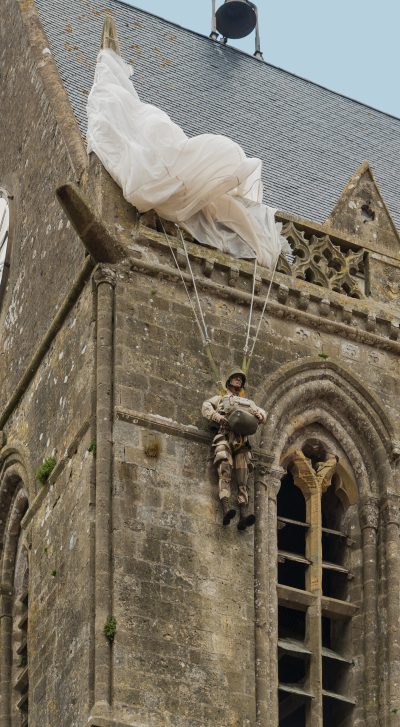
Sainte-Mère-Église
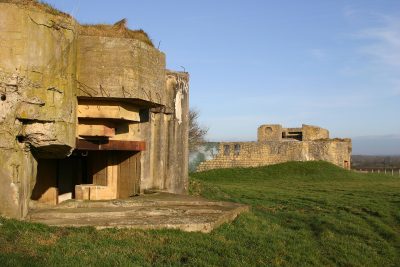
Azeville Battery
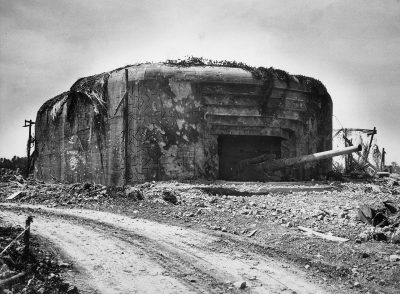
Crisbecq Battery
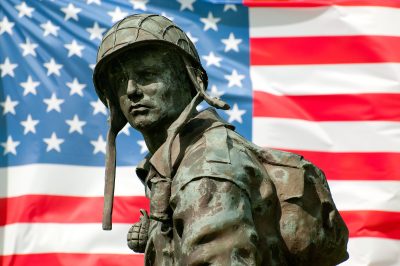
La Fière Bridge & Causeway
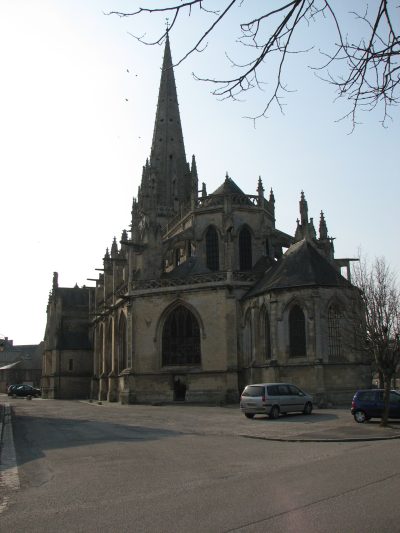
Carentan
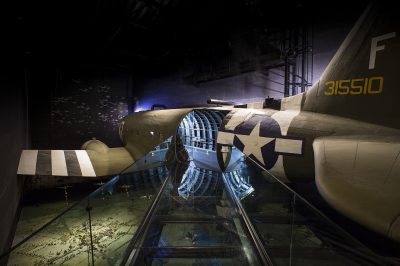
Airborne Museum
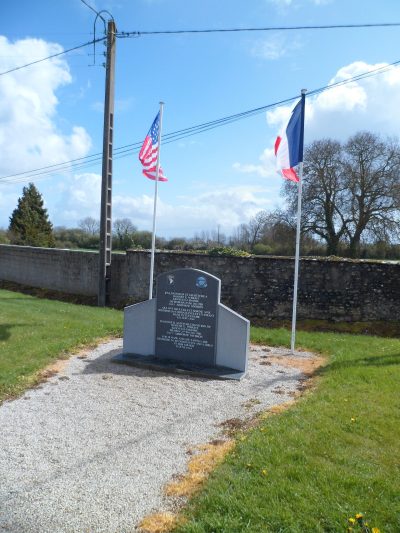
Angoville-au-Plain Church
Brécourt Manor
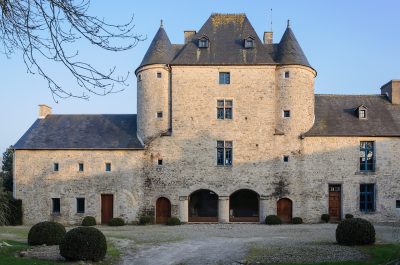
Sainte-Marie-du-Mont
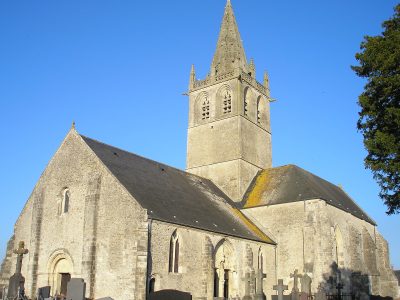
Saint-Côme-du-Mont
Chef-du-Pont