Saint-Côme-du-Mont
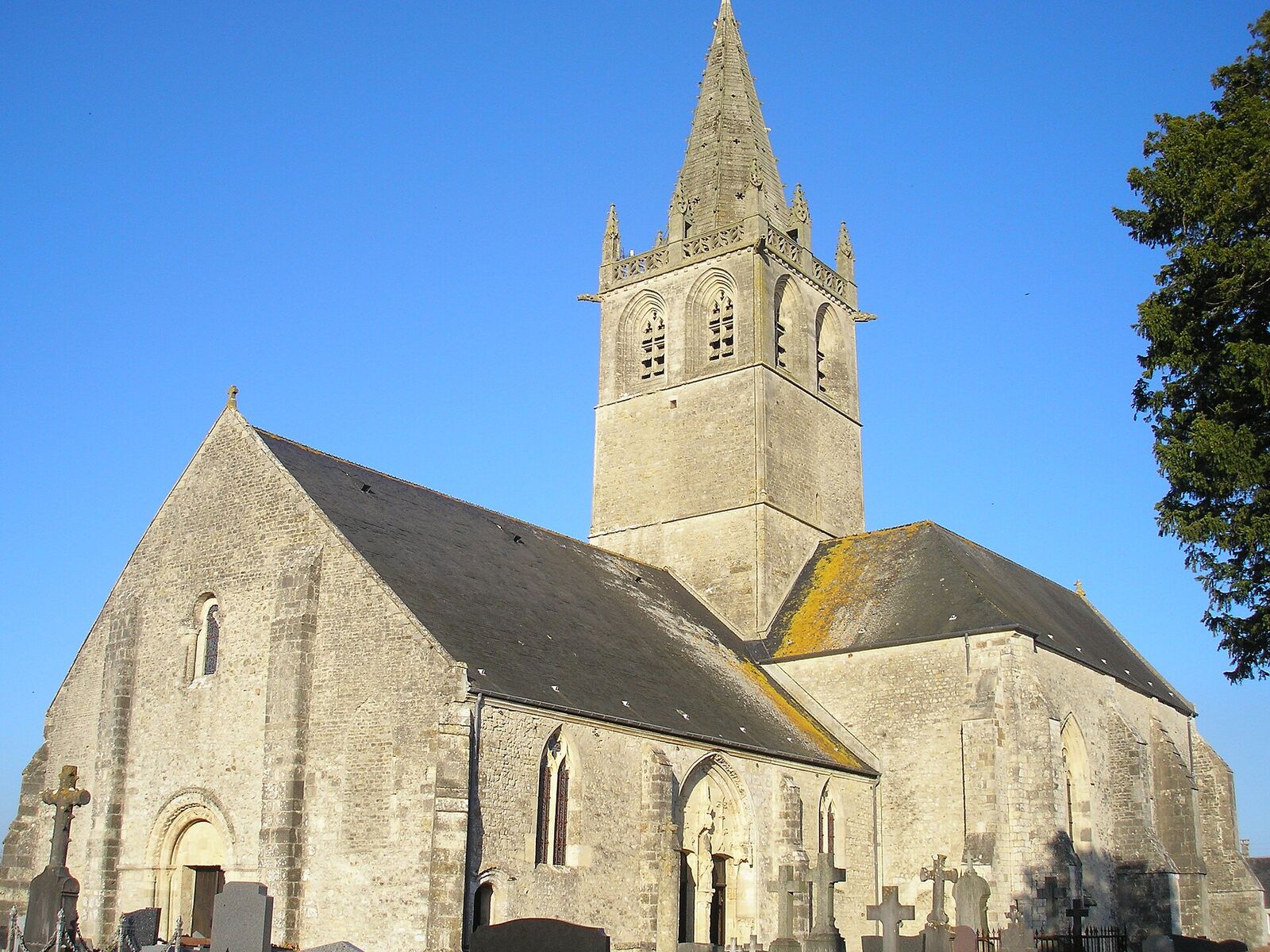
A village on the causeway approach to Carentan, bitterly contested by the 101st Airborne in the days after D-Day. The nearby crossroads known as Dead Man's Corner, named for a knocked-out tank left there for days, became one of the most fought-over points in the Cotentin.
Saint-Côme-du-Mont sits on the last dry ground before the marshes that guard Carentan, at the point where the road from Utah Beach tips down onto an exposed causeway. Whoever held the village controlled the only firm approach to the town that linked the American beachheads. For three days in June 1944 that made this quiet farming parish one of the hardest-fought corners of the Cotentin.
What happened here
When the 101st Airborne dropped in the dark hours of 6 June, many sticks came down scattered across the flooded fields around the village. Paratroopers spent the following days regrouping under fire and pushing toward Saint-Côme against a determined defence: German fallschirmjäger of the 6th Parachute Regiment under Major von der Heydte, stiffened by ordinary infantry dug into the hedgerows and hamlets. At Les Droueries, a cluster of farms just east of the village, a German battalion pinned the advancing airborne troops for roughly two days, turning small stone farmsteads into strongpoints.
The village finally fell on 8 June, after an intense pre-dawn bombardment - American field artillery is recorded firing thousands of 105mm shells into and around Saint-Côme in the space of an hour and a half. Even then the fighting was not finished. Beyond the village the road ran south along a raised causeway flanked by water, crossing a string of bridges. In the days that followed, the men pushing down it toward Carentan came to call that stretch Purple Heart Lane, a measure of what it cost to cross open ground with no cover on either side.
Dead Man's Corner
The crossroads just south of the village became the most notorious landmark of the whole sector. On 7 June an American light tank leading the advance was knocked out here by a German anti-tank rocket. Its crew was hit, and a dead crewman remained in plain view in the wreck for days while the fighting raged around it. Soldiers moving up simply used it as a reference point - the corner with the tank and the dead man in it - and the name stuck. Historians still argue over the precise details of the crew and even which tank it was, a reminder of how quickly battlefield legend hardens around a grim image.
The house overlooking the junction has its own layered history. It served first as a command post for von der Heydte's paratroopers, then, once the Americans took the ground, as a headquarters for the 502nd Parachute Infantry Regiment. That same building is now a museum.
What to see today
Saint-Côme-du-Mont is small - since 2016 it has been part of the commune of Carentan-les-Marais - and easily reached from the N13. The obvious stop is the Dead Man's Corner Museum, at the crossroads on the old road toward Carentan. Its collection is unusually strong on the airborne war, German and American alike, displayed in the very house that both sides used as a command post. Alongside it, the separately ticketed D-Day Experience centres on a restored wartime C-47 turned into a jump simulator, preceded by a staged mission briefing.
Stand at the junction and orient yourself: the ground falls away to the south and west toward the marshes, and you can read at a glance why the causeway beyond was a killing ground and why this rise mattered so much. The village church, a landmark visible across the flat country, was the kind of high point both armies coveted for observation. Take time to drive the low road south toward Carentan - the modern equivalent of Purple Heart Lane - to feel the exposure the paratroopers faced with water on both sides and nowhere to hide.
Practical notes
The village is signed off the N13 between Sainte-Mère-Église and Carentan, and the crossroads you want is on the old road south, a minute from the slip road. The museum at Dead Man's Corner has its own car park at the junction, which is where most visitors leave the car; for the village and the church there is free parking on the square. The museums are ticketed and the village itself costs nothing.
Give the crossroads and the village half an hour, or a good half day if you take in both museums. The junction, the square and the lanes between them are flat and surfaced, and the walk from one to the other is short and level, so a pushchair or a wheelchair copes with the village without trouble. The museum occupies an ordinary house, so the rooms and the stairs inside are tight, and the verges along the old Carentan road are narrow with no footway, so drive that stretch rather than walking it.
The natural companion is Angoville-au-Plain barely two kilometres away, where a medic tended wounded from both sides in the church and the pews still carry the stains, and beyond it Sainte-Marie-du-Mont on the road back to the beach.