Brécourt Manor
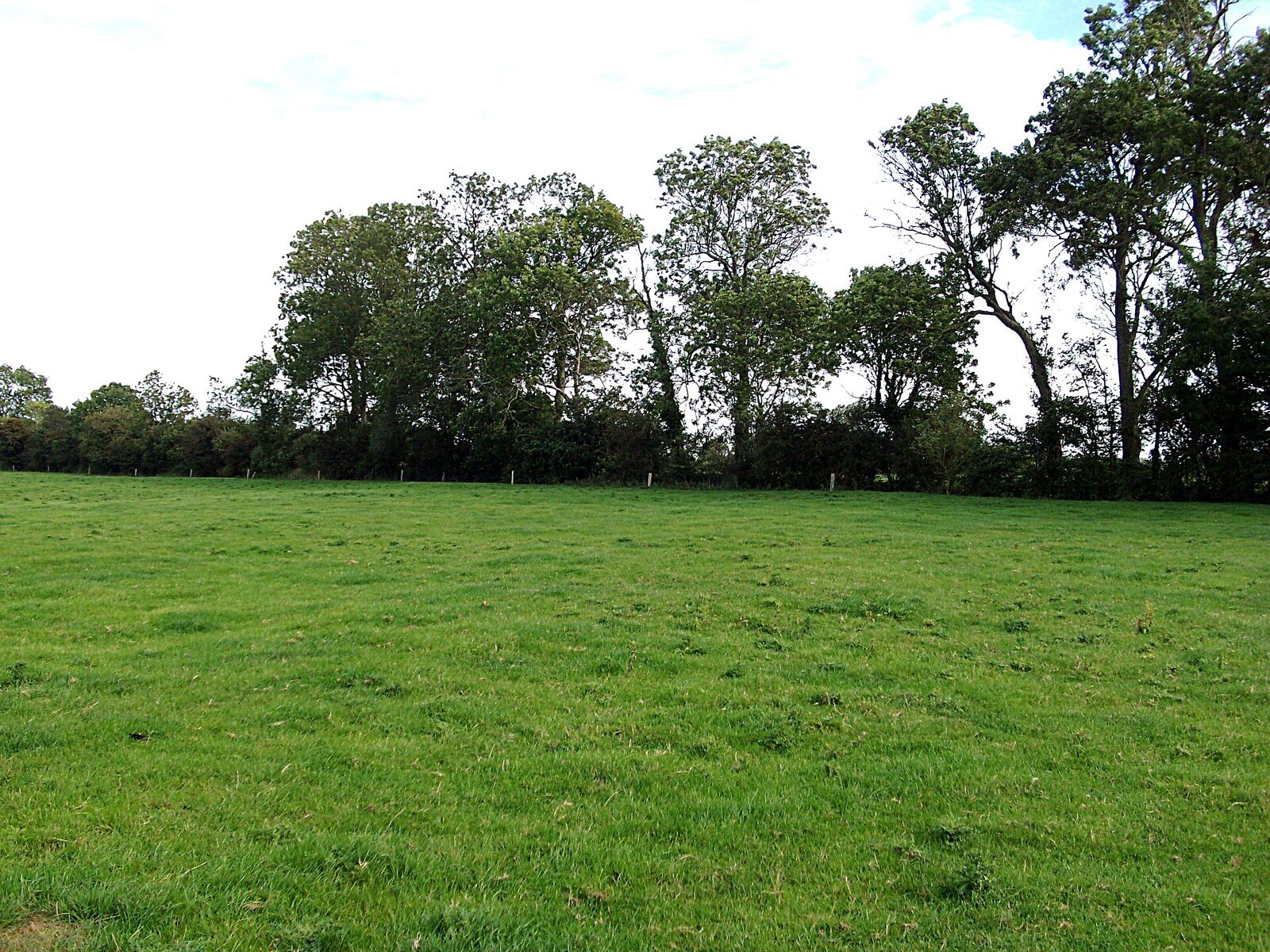
On the morning of D-Day a small group of 101st Airborne paratroopers led by Lieutenant Richard Winters knocked out a German battery firing on Utah Beach. The textbook assault on a fixed position is still studied at military academies and featured in Band of Brothers.
Just inland from Utah Beach, in a corner of pasture at Le Grand Chemin near Sainte-Marie-du-Mont, a hedge-lined field became one of the most closely studied small-unit actions of the entire war. There is little here to announce it: a working dairy farm, a manor house behind trees, cattle grazing where four German howitzers once fired on the invasion beach. Yet soldiers still walk this ground with maps in hand, tracing a fight that lasted only a few hours and is taught to officer cadets to this day.
What happened here
On the morning of 6 June 1944, paratroopers of Easy Company, 506th Parachute Infantry Regiment, 101st Airborne Division - scattered and under strength after a chaotic night drop - were sent to silence a battery of four 105mm guns hidden along a hedgerow. The guns were sited to sweep one of the causeway exits off Utah Beach, the raised roads across the flooded fields on which the seaborne landing depended. The order given to the young officer leading the group was almost offhand: deal with the fire coming from that hedge.
What followed became a textbook of fire and manoeuvre. Rather than rush the position head-on, the paratroopers set machine guns to pin the defenders, then worked along the German trench line one gun at a time, using the connecting ditches as covered approaches and clearing each pit with rifle fire and grenades. The howitzers were destroyed by dropping explosive charges down their barrels. A relative handful of Americans took on a substantially larger defending force, knocked out all four guns, and paid for it with several men killed and others wounded.
The lasting value of the fight was not only tactical. In one of the gun pits the attackers found a German map marking the batteries and fields of fire all along this stretch of coast - intelligence passed up the chain that helped commanders understand what they faced inland. Among the odder discoveries were belts of wooden-tipped rounds, a small sign of how the occupier's war economy was fraying by 1944.
Why it is still studied
The action is remembered partly because one of its participants, Richard Winters, later wrote about it with unusual clarity, and partly because the HBO series Band of Brothers put Easy Company into the popular imagination. But it earns its place on military syllabuses on its own merits: a demonstration of how a smaller force, well led and using ground intelligently, can overwhelm a fixed defensive position at low cost. Recent archaeology by a French university team has relocated several of the original gun pits and uncovered the ammunition bays dug into each one, confirming how faithfully the field still matches the wartime aerial photographs.
Practical notes
Brécourt remains private property and a working farm, so the trenches and gun positions cannot be entered - respect this; the fields are not a memorial park. Everything worth seeing is reached from the roadside near Le Grand Chemin, a hamlet on the lanes north-east of Sainte-Marie-du-Mont, where a memorial stone to the men of Easy Company stands on the verge. It rewards a slow look: orient yourself so the treeline runs away toward the north-east, toward the beach, and you are looking down the same axis along which the guns fired. The drainage ditches the paratroopers crawled through still thread the fields.
There is no car park. Pull well in on the grass, leave the farm gateways clear, and expect tractors and milk lorries on a road with no pavement and poor sightlines; it is a working farm road first and a battlefield second. Nothing here is ticketed, because there is nothing to enter, and there are no facilities on site - no café, no toilets, no visitor centre.
Twenty minutes covers it, which is why almost everyone folds Brécourt into a longer airborne loop rather than driving out for it alone. The stop itself is roadside and level, so it is fine from a car with a wheelchair or a pushchair, though the verge is grass, often rutted, and muddy after rain, and there is nowhere to sit.
A few kilometres away, near the coast, a bronze statue honours Winters and, through him, all the junior officers who led at the front. The land itself carries a further thread of history: the family who own Brécourt also founded the Utah Beach Landing Museum, having lived through the invasion on this very ground, and that museum makes a natural pairing, as do the airborne collections at Sainte-Mère-Église. Closer still is Sainte-Marie-du-Mont, a few minutes away, whose square and church tower anchor the whole 101st Airborne story on this side of the Douve. If you want a second quiet stop in the same mood rather than another museum, the church at Angoville-au-Plain is a short drive south.