Montebourg
A town on the road to Cherbourg almost wholly destroyed in heavy fighting in mid-June 1944, as the US VII Corps battered its way north up the Cotentin Peninsula against determined German resistance.
Montebourg is one of those places whose importance in June 1944 came simply from where it stood. The town sits astride the old Route Nationale 13, the direct road from the invasion beaches to Cherbourg, and both sides understood that whoever held it controlled the drive up the Cotentin. For the Germans it was a cork in the bottle; for the Americans it was an obstacle that had to be smashed. It was smashed, and so was the town.
The battle for the Cherbourg road
After the landings at Utah Beach and the seizure of Sainte-Mère-Église, the US 4th Infantry Division under Major General Raymond Barton pushed north up the peninsula. By around 10 June its regiments had reached the approaches to Montebourg, and there the advance stalled. German troops of the 709th Infantry Division and other Cotentin units had dug in on the high ground around the town, and for more than a week the front line barely moved. This was not the swift liberation seen in some coastal villages but a grinding, static fight of artillery duels and small local attacks, fought in hedgerow country that favoured the defender.
The deadlock broke only when the whole VII Corps launched its concentrated offensive toward Cherbourg. In the early hours of 19 June, Barton's regiments moved to outflank the town rather than batter straight through it, working around it to east and west. With his withdrawal routes threatened, the German commander ordered a retreat, and Montebourg fell around 19-20 June. Within days American forces had swept on to invest Cherbourg itself.
A town reduced to ashes
Holding Montebourg cost the Germans nothing in cultural conscience, and taking it cost the Americans little restraint: the town was pounded by land artillery, aircraft, and the heavy guns of warships offshore. By the time the fighting passed, Montebourg had been reduced almost entirely to rubble, with only a few hundred civilians left sheltering among the ruins. It stands with neighbouring Valognes as one of the Cotentin towns effectively erased in the price of Cherbourg's port.
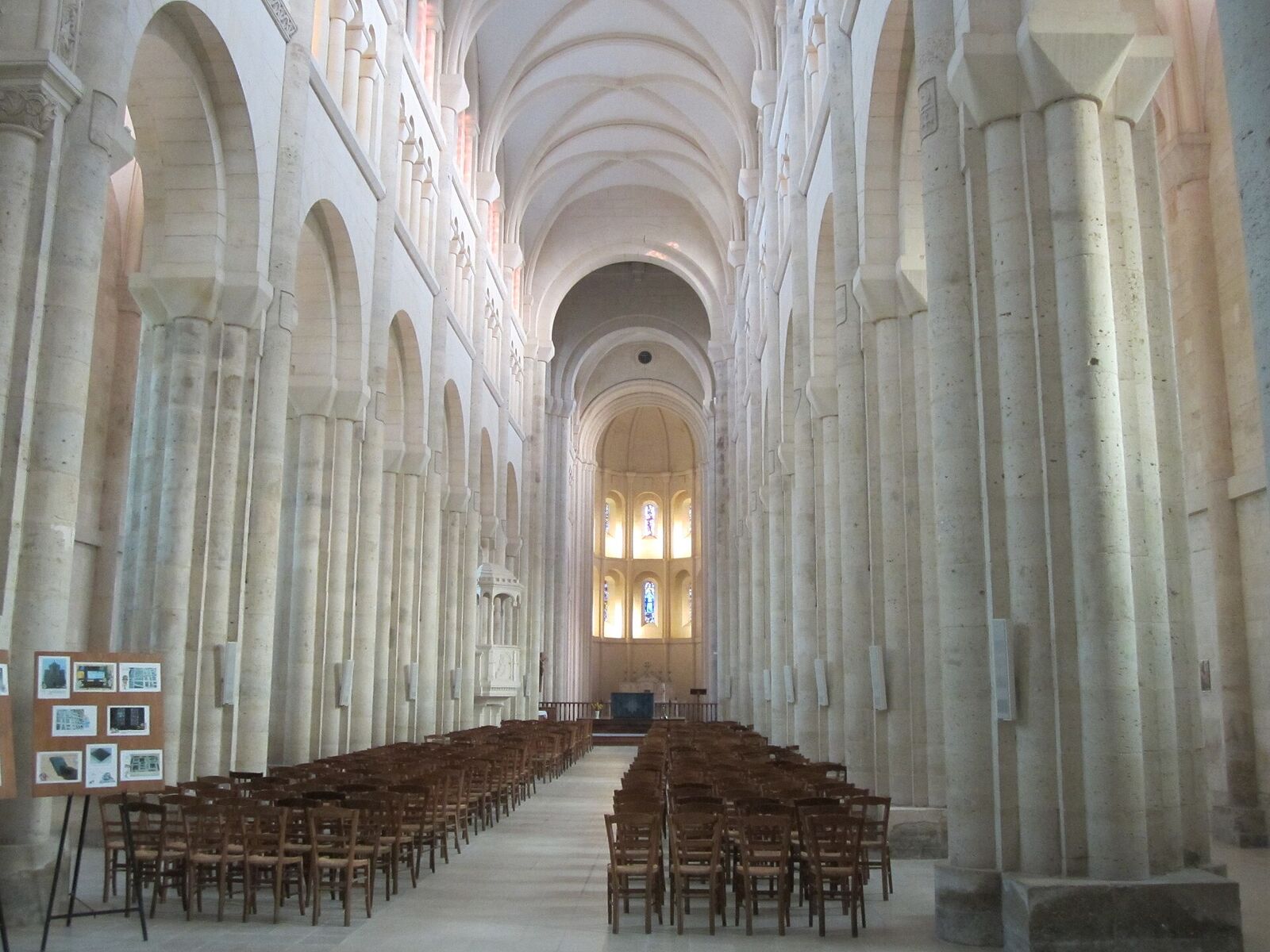
The most telling casualty was the medieval church of Saint-Jacques. Its tall stone steeple, built in the early 14th century, made an ideal observation post, and German artillery spotters used it to direct fire onto the advancing Americans. Naval gunners answered by firing on the tower itself: a shell punched through the south face of the steeple, the crown and the south transept collapsed, and the roofs of the choir and north transept caught fire. What had guided German shells for days was left a burnt-out shell of its own.
What to see today
Montebourg today is a quiet market town, and its calm is itself the story: almost everything you see is post-war reconstruction. Stand in front of the church of Saint-Jacques and look up at the spire. It is not the survivor it appears to be but a faithful rebuild, the steeple restored in 1950, the bell-tower frame the following year, and the church returned to worship in 1952, reconstructed to match what the shelling destroyed. Knowing this, the eye starts to read the whole town centre differently, its tidy stone-and-render facades belonging to the 1950s rather than earlier centuries.
Look too for the town war memorial, which commemorates both local dead and the Allied soldiers who fought here, and for the neo-Romanesque abbey buildings on the edge of town, successors to a monastery whose origins reach back to the era of William the Conqueror. Montebourg rewards the traveller who pauses rather than passes through on the way to Cherbourg or Sainte-Mère-Église: it is a lesson in how completely a place could be destroyed, and how deliberately it was raised again.
Practical notes
Montebourg is strung along the old N13, now the D974, which runs parallel to the Cherbourg dual carriageway; leave the fast road at the Montebourg exit and you are in the centre within a minute. Park around the church square or the market place, both of which are free and rarely full. The church, the war memorial and the town centre are open access.
An hour is plenty, and it is best spent slowly: the point of Montebourg is what you notice about the buildings, not any single monument. Add half an hour if the church is open and you want to look at the rebuilt steeple from inside.
The centre is flat, paved and easy going with a wheelchair or a pushchair, with the church, the square and the memorial all within a few hundred metres of one another; the older lanes have narrow pavements and the odd high kerb. This is a good stop to make on the way north, and it works well with the two big coastal gun positions to the east, Azeville Battery and Crisbecq Battery, which are ten minutes away and tell the other half of the fight for the Cotentin.