Grandcamp-Maisy
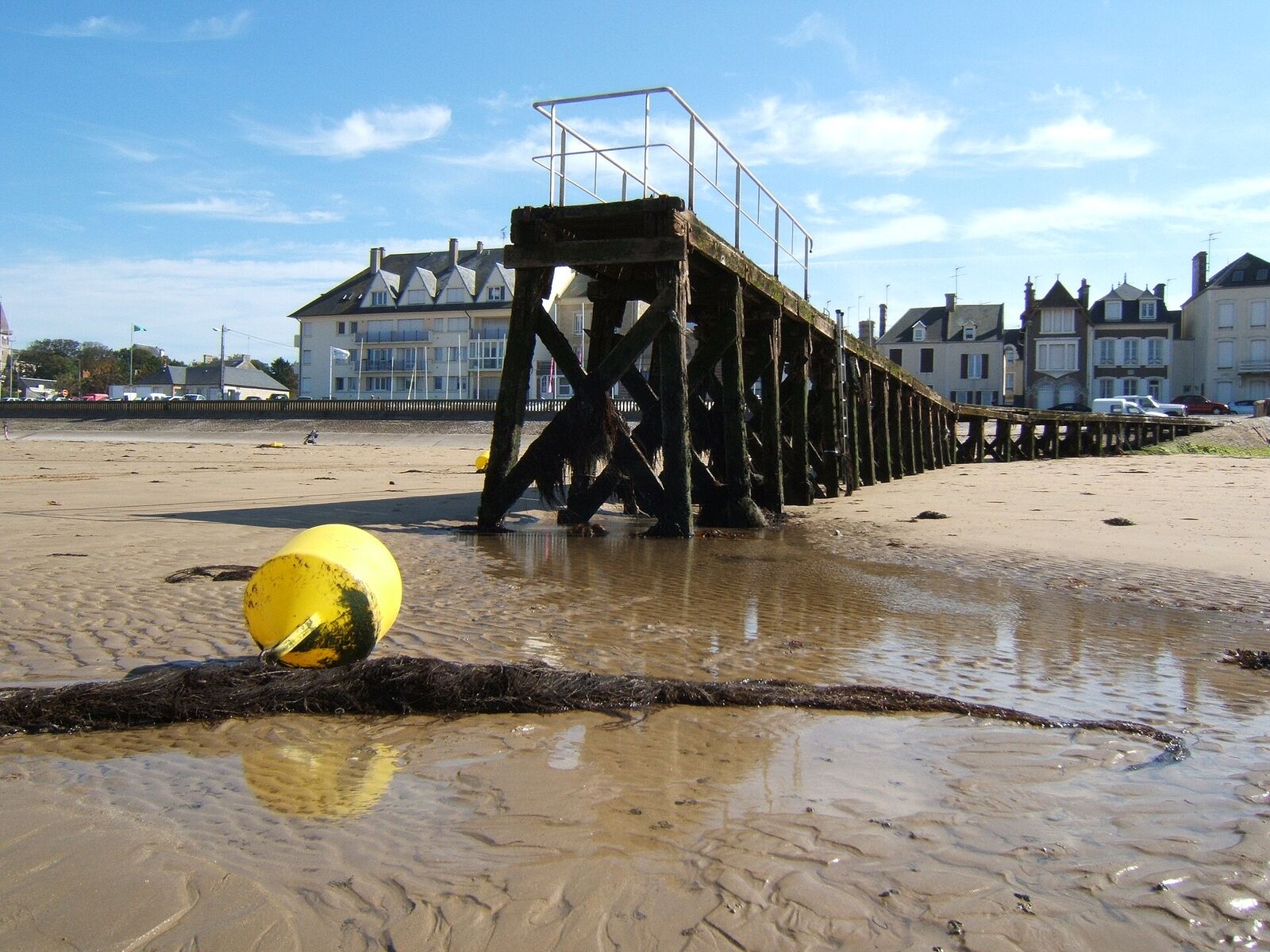
A fishing port west of Omaha Beach that became a base for the US Rangers after the landings and home to the Musée des Rangers. Its quayside, restaurants and the nearby Maisy Battery make it a quiet stop on the western Calvados coast.
Grandcamp-Maisy sits at the quiet western end of the Calvados invasion coast, a genuine working fishing harbour rather than a place that trades on its history. Trawlers still land scallops and the stalls on the quay still sell the morning's catch. Yet a few fields inland lie the earthworks of one of the most argued-over positions of the whole D-Day story, and the village itself was, for a few weeks in June 1944, a forward base for the American Rangers.
A port on the edge of the battle
The commune is a marriage of two older villages, the seaside resort of Grandcamp-les-Bains and neighbouring Maisy, and it kept the salt-worn character of a fishing town while the bigger names along the coast filled with visitors. In June 1944 the harbour lay just west of the American Omaha sector, close enough to the fighting to matter but spared the worst of it. Once the beachhead held, the little port became useful ground behind the lines, and the Rangers who had bled their way off Pointe du Hoc and along the coast moved through here. The connection stuck: the quay, Quai Henri Crampon, later became the home of a small museum devoted to their story.
The battery that vanished
Inland from the harbour, the Germans built a substantial artillery position known today as the Maisy Battery. It was in fact a cluster of strongpoints - Les Perruques (Widerstandsnest 83), with a battery of elderly but heavy 155mm field guns, and La Martinière (WN 84) a few hundred metres west with lighter Skoda pieces - linked by a network of trenches running for something like two to three kilometres, with bunkers, magazines, quarters and an aid post dug in beneath the fields. Its position let it range both Omaha and Utah, and it was hit repeatedly by naval gunfire in the days after the landings. On 9 June elements of the US 2nd and 5th Ranger Battalions closed in and cleared it in a firefight that ran for several hours.
Then the strange part: after the war the whole site was deliberately buried under a metre or more of earth and effectively forgotten for sixty years. It was rediscovered only in the 2000s by a British collector, Gary Sterne, who followed an annotation on an old American invasion map, bought up the land and dug the position back out. Sterne argues that Maisy was a more significant target than the famous, and by 6 June largely gun-less, emplacements at nearby Pointe du Hoc - a claim that continues to divide historians. Whatever the verdict, the sheer scale of what was hidden here is startling.
What to see today
The Maisy Battery, which reopened to visitors in 2007, is deliberately raw. You walk the original trench lines through open ground, past gun platforms, bunkers and underground rooms, with little of the polish of the bigger memorial museums - wear proper footwear, because the earth turns to mud after rain. That roughness is the point: it gives a truer sense of 1944 than a manicured site can.
Down on the harbour, orient yourself along Quai Henri Crampon. Note that the town's Musée des Rangers, which opened in 1990, closed in 2015 and its collection has since moved on, so check ahead rather than count on it. The quay itself remains the reason to linger - the fish market, the moored boats, the restaurants where you can eat what the fleet landed that morning. From here Pointe du Hoc is a short drive east and Isigny-sur-Mer and the Utah sector lie to the west, which makes Grandcamp a calm, unhurried base for the western beaches.
Practical notes
Grandcamp-Maisy sits at the western end of the D514 coast road, a couple of minutes off the N13 at Isigny, and the harbour is the place to aim for: there is parking along the quay and around the seafront. The battery is signposted separately, inland from the village on a country lane, and has its own car park at the entrance; it is privately run and ticketed, while the quay costs nothing.
Allow an hour and a half to two hours for the battery, because the interest lies in walking the full run of the trench line rather than looking at the bunkers from the gate, and another hour if you plan to eat by the water. The ground there is farmland: grass, bare earth, sunken trenches with uneven footing and steps down into the shelters, so it is not a realistic proposition with a wheelchair or a pushchair. The harbour front, by contrast, is flat and paved throughout.
For a contrast to a morning spent on the Ranger sites, La Cambe German War Cemetery is about ten minutes inland. Going the other way, Vierville-sur-Mer and the western end of Omaha are roughly a quarter of an hour east along the coast.