Creully
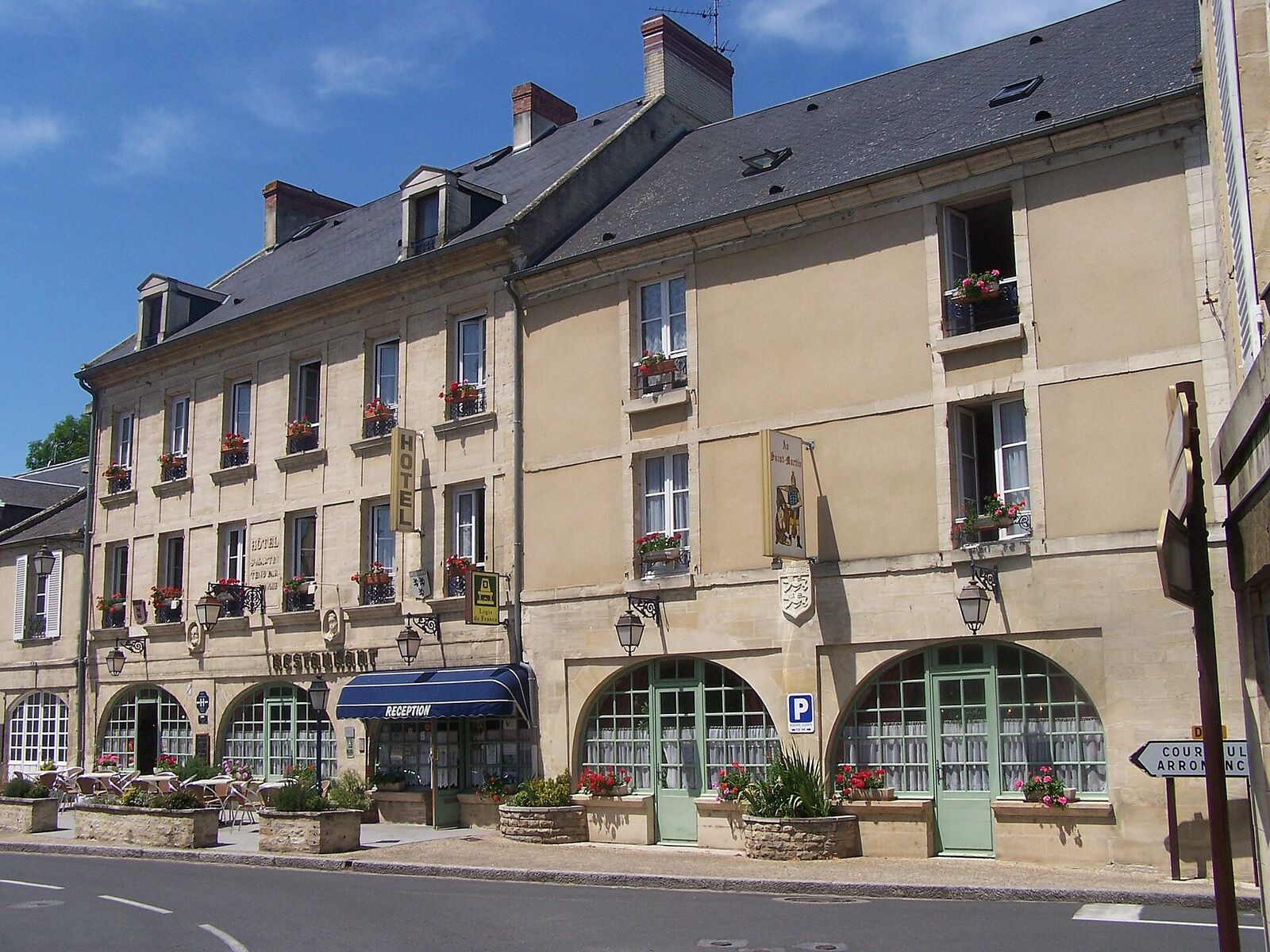
A village inland from Gold Beach whose medieval château became a BBC broadcasting station in June 1944. From its tower, war correspondents transmitted the first eyewitness reports of the Normandy campaign to listeners around the world.
Set back from the coast in the quiet valley of the Seulles, Creully is an unassuming stone village that spent a few weeks in the summer of 1944 at the centre of the world's attention. While the fighting moved inland from Gold Beach, it was from here that the first eyewitness voices of the Normandy campaign reached homes across Britain, the Commonwealth and beyond. Two neighbouring châteaux - one a broadcasting post, the other a general's field headquarters - tell most of the story.
What happened here
Creully sits a short drive inland from the Gold Beach landing zones, on the road toward Caen and Bayeux, which made it strategically useful within hours of the landings. Canadian armour pushing inland from the Juno sector at Courseulles-sur-Mer passed through the village on 6 June 1944, and the main square is named for a Canadian tank officer of the 1st Hussars, whose crew is remembered locally for driving furthest inland that day, reaching the Caen-Bayeux highway.
The village's real fame came from its old fortress. From the day after D-Day, the BBC installed a small team of war correspondents in the square medieval tower of the Château de Creully, turning a room built for archers into an improvised radio studio. A US Army field transmitter beamed dispatches directly to receiving stations on the south coast of England and on to London. After days of equipment trouble, the first successful broadcast went out on 19 June 1944, and for the following weeks - until around 21 July - the tower carried the running account of the Battle of Normandy to the world. The correspondents were an international crowd: BBC men such as Frank Gillard, the Australian Chester Wilmot, and reporters filing in French for occupied Europe among them. Many of their reports were cut in the field on portable "Midget" disc recorders, carried onto the beaches and up to the front, then brought back to the tower to transmit.
Across the river, on the opposite bank of the Seulles, the neighbouring Château de Creullet became the tactical headquarters of General Montgomery from 8 June. Characteristically, he chose not to sleep in the château but in a cluster of caravans parked on its lawn, one of them captured from an Italian general in North Africa. In the space of a week the garden received an extraordinary run of visitors: Churchill on 12 June, de Gaulle on 14 June, Eisenhower on 15 June, and King George VI on 16 June, before the headquarters moved on later in the month.
What to see today
The medieval tower now houses a small museum of radio and war reporting, and it remains the reason to come. Guided visits (in French or English, roughly three-quarters of an hour) take you up into the studio room where the correspondents worked; the walls carry photographs and documents recalling the reporters who broadcast from here, alongside a collection of receivers and transmitting gear spanning the twentieth century. Standing in the cramped stone chamber, it is easy to grasp how physically close the news-gathering was to the fighting.
Take time to read the village around the château as well. The square named for the Canadian officer, and the local primary school named for a British veteran, are reminders that Creully treats its liberation as a matter of individual people, not just armies. From the high ground by the castle you can look out over the Seulles valley toward Creullet and picture Montgomery's caravans on the far lawn.
Creully makes a natural, less-crowded stop between Arromanches and Bayeux. Check current opening hours before travelling, as the tower museum keeps seasonal times, and confirm whether the interior is open on the day rather than assuming access to the grounds alone.
Practical notes
Creully sits about ten minutes inland of the coast road, on the cross-country route between Bayeux and the Canadian beaches, and the château stands in the middle of the village above the Seulles. There is parking on and around the main square, a short walk from the tower entrance, and the village is small enough that everything described here lies within a few hundred metres of it.
An hour covers the guided visit and a wander round the square. The streets are level, if cobbled in places, but the museum occupies the upper room of a medieval tower and is reached by a stone staircase, so it does not suit a wheelchair and is awkward with a pushchair. Creullet across the river remains a private house, so the view from the high ground by the castle is as close as you get to Montgomery's lawn.
Being inland, Creully pairs neatly with the sites just behind the British beaches. Ver-sur-Mer and the British Normandy Memorial on the ridge above the coast are both within about ten minutes by car.