British Normandy Memorial
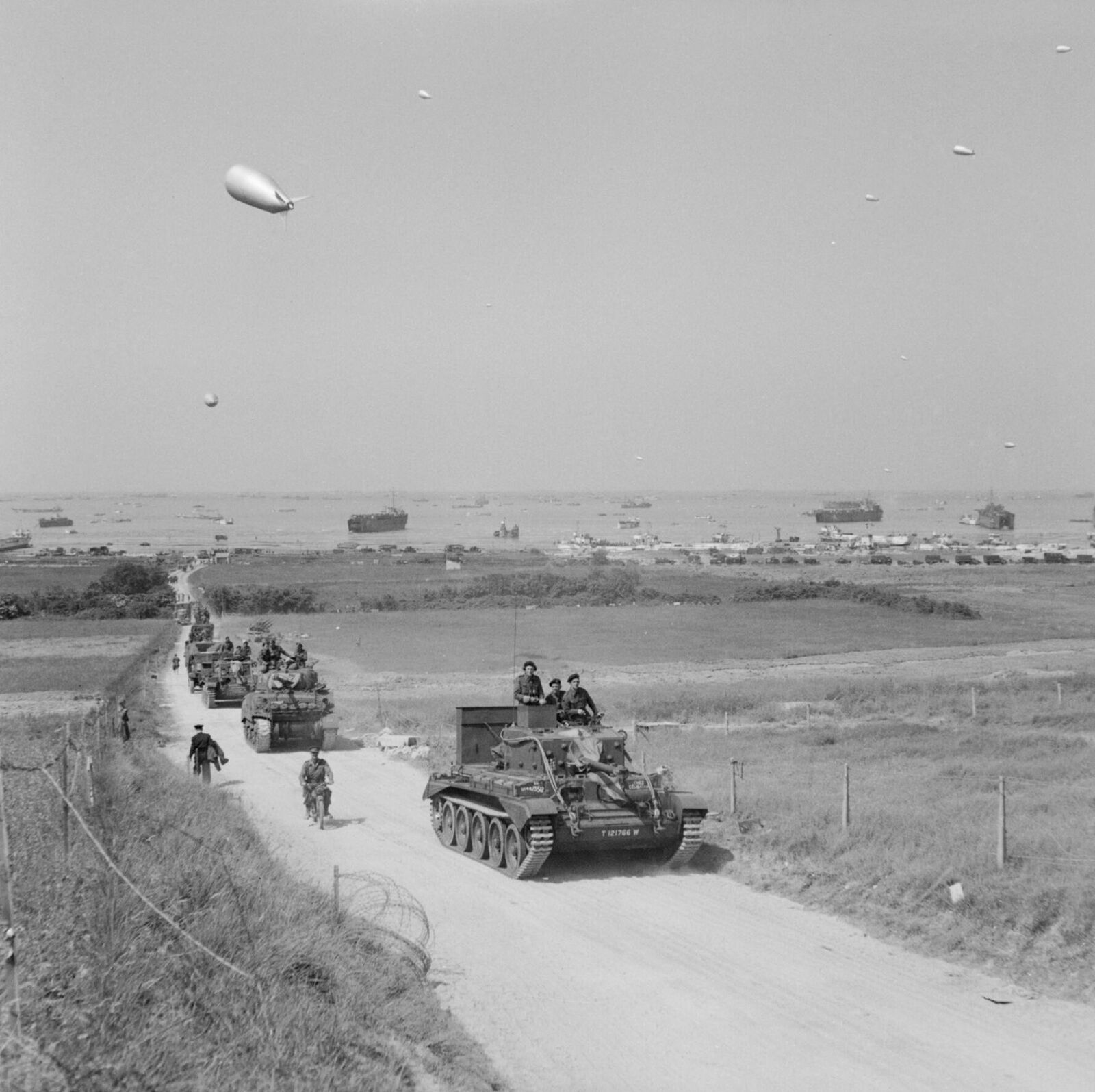
Opened in 2021 on a hillside above Gold Beach, this memorial records the names of the 22,442 servicemen and women under British command who died in the Normandy campaign. Its columns and sculptures look out over the very beaches where so many came ashore.
For decades there was a curious gap in the Normandy landscape. France, the United States, Canada and other Allied nations had national memorials to their dead; the United Kingdom, which had planned and led the invasion, had none. This hillside above Gold Beach fills that gap. It is a place built to do one thing precisely: to name, individually, every serviceman and woman under British command who died in the campaign, and to set those names in sight of the sea they crossed.
How the memorial came to be
The idea is often traced to George Batts, a Royal Engineers veteran of D-Day who, meeting a BBC broadcaster in 2015, pointed out the anomaly of Britain having no memorial of its own on the ground where so many fell. The project moved quickly for something of its scale. A foundation stone was laid on the 75th anniversary in 2019, and the completed memorial was inaugurated on 6 June 2021, the 77th anniversary of the landings, with an address from the then Prince of Wales.
The architect, Liam O'Connor, had earlier designed the Armed Forces Memorial in Staffordshire, and the same restraint is visible here: classical, quiet, and deliberately unobtrusive within the coastal farmland. Some four thousand tonnes of French Massangis limestone were cut and inscribed by British stonemasons before being assembled on site.
What the names record
The heart of the memorial is the 22,442 names, drawn from more than thirty countries, of those under British command killed between 6 June and the end of the Normandy campaign in late August 1944. What makes the wall unusual is its ordering. The names are set out chronologically, by the day each person died, rather than grouped by rank or regiment. Walk the columns in sequence and you are, in effect, reading the campaign day by day: the crowded panels of the first weeks, the grinding losses of the summer battles inland. A separate D-Day Wall records the number killed on the first day alone.
The lettering itself repays a close look. The sculptor and letter-cutter Richard Kindersley designed a bespoke typeface for the memorial and supervised the carving, so the inscriptions have a consistency and clarity rare on a monument of this size.
What to see today
Stand at the forecourt first. David Williams-Ellis's bronze sculpture shows three soldiers advancing from the sea, positioned so that they appear to be coming ashore towards you with Gold Beach behind them. From here the ground falls away toward the coast, and on a clear day you can pick out the surviving caissons of the Mulberry harbour off Arromanches to the west.
Within the central court, look down: the paths are laid out to form the pattern of the Union Flag across the quadrangle. At its centre sits a bronze wreath and shield, the work of the French sculptors Valentine Herrenschmidt and Christophe Charbonnel, a deliberate gesture of Franco-British authorship. Nearby is a separate French Memorial, added to honour the Normand civilians killed during the fighting and the liberation, a toll often overlooked by visitors focused on the military story.
The setting itself is part of the history. Just below the memorial lie the remains of the Mont Fleury battery, and this stretch of coast is where Company Sergeant Major Stan Hollis of the Green Howards performed the actions that earned the only Victoria Cross awarded on D-Day itself. Give yourself time to walk the full length of the columns rather than reading a single panel; the accumulation, name after name in date order, is the point.
Practical notes
The memorial stands on the high ground above Ver-sur-Mer, signposted off the D514 coast road, and it has its own car park at the entrance. Access is free and there is no ticket to buy. Coaches stop here, so if you want the columns to yourself, come early or late in the day.
Allow an hour. That is enough to walk the full length of the name columns, take in the sculpture and the French Memorial, and stand a while looking out to sea. Half of that will feel rushed.
The ground is level throughout and the paths are wide and firmly surfaced, so a wheelchair or a pushchair manages the whole site comfortably. There is no shelter at all on the hillside, which is exposed to whatever the Channel is doing, so bring a coat even in summer. It pairs most naturally with the village museum at Ver-sur-Mer just down the hill, or with a short drive west along the coast to the Mulberry harbour at Arromanches, which the memorial looks out towards, and the casemates of Longues-sur-Mer Battery beyond it.