Courseulles-sur-Mer
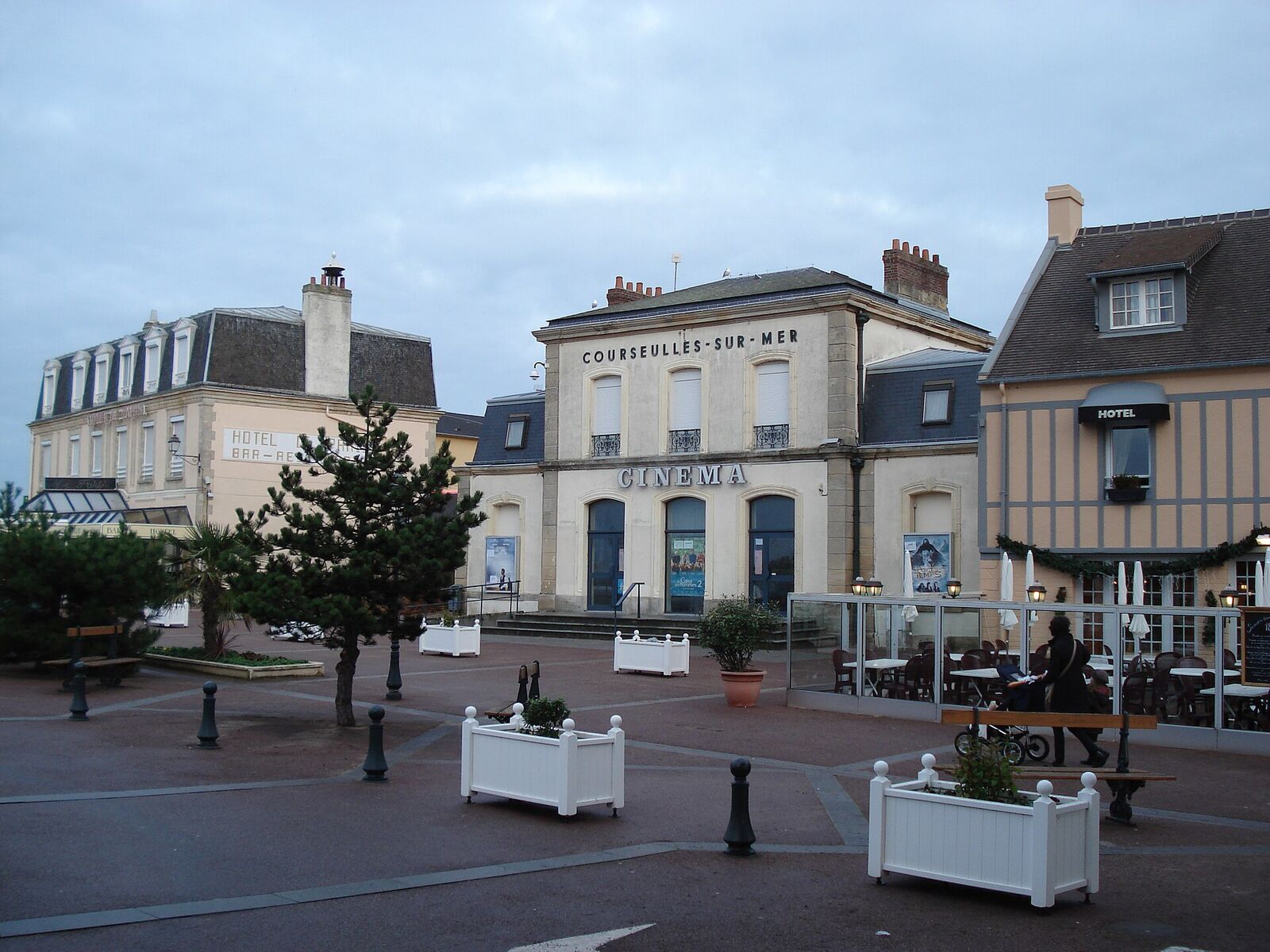
A harbour town at the heart of Juno Beach where Canadian troops landed and, days later, Winston Churchill, General de Gaulle and King George VI came ashore to visit the bridgehead. A Sherman tank and the Croix de Lorraine memorial stand on the quay.
Courseulles sits at the mouth of the little River Seulles, roughly at the centre of the stretch of coast the Allies code-named Juno. Today it is a cheerful harbour town of oyster stalls, sailing masts and a broad tidal beach, and it is easy to forget that this quay was one of the most fought-over patches of sand on the morning of 6 June 1944. The town was among the very first pieces of France to be liberated, and it became, in the days that followed, a doorway through which men, supplies and history passed back onto French soil.
What happened here
The assault on this part of Juno fell to the 3rd Canadian Infantry Division. At Courseulles itself the leading infantry were the Regina Rifle Regiment and the Royal Winnipeg Rifles, and they were meant to be preceded onto the beach by amphibious Duplex Drive Sherman tanks of the 1st Hussars - ordinary tanks kept afloat by a collapsible canvas screen and driven through the water by twin propellers.
The sea that morning was rougher than planned. Several of the DD tanks launched offshore were swamped and went down before they reached the sand, and the infantry came ashore late, into machine-gun and anti-tank fire from German strongpoints built into the dunes and behind a concrete sea wall. The fighting to clear the town was close and costly. Yet once through, the Canadians pressed harder and deeper inland than any other Allied force that day, reaching almost ten kilometres from the coast. Within days the captured harbour was working around the clock, landing on the order of a thousand tons of stores a day to feed the growing bridgehead.
It was that harbour, secure and sheltered, that drew the visitors. On 14 June 1944 General de Gaulle stepped ashore here - his first footstep on liberated French soil since 1940 - and in the same period Winston Churchill and, a little later, King George VI came across to see the beachhead for themselves.
What to see today
The heart of it all is the Place du 6 Juin, on the quay by the harbour mouth. Standing here is the Sherman tank known as Bold, and it is worth pausing over: this is not a display prop but a real DD tank of the 1st Hussars that sank off this beach on D-Day. It lay on the seabed until 1970, when it was recovered from the water - a project involving Léo Gariépy, a Canadian who had landed here in 1944 and afterwards made his life in Normandy. Look at the hull and you can read the town's gratitude in the unit badges fixed to it.
A few steps away rises the great Cross of Lorraine, eighteen metres of pale concrete, marking the spot associated with de Gaulle's return. Nearby, low memorials honour the Regina Rifles and - along the seafront promenade - the Royal Winnipeg Rifles, the "Little Black Devils," who breached the sea wall here. Read the Regina Rifles stone carefully: it remembers the hundreds of the regiment's men killed across the whole war, not only this beach.
Set into the dunes at the Seulles estuary is the Juno Beach Centre, opened in 2003, the only museum on these beaches devoted to the Canadian war effort; its walk-out onto the beach and the surviving bunkers behind it give the ground its scale. Finally, if you have a car, drive the four kilometres inland to the Bény-sur-Mer Canadian War Cemetery, where more than two thousand Canadians lie in quiet rows - the far, sobering end of the story that began on the sand below the town.
Practical notes
Courseulles is on the D514 coast road, and the D79 runs up to it from Caen. Park on or around the Place du 6 Juin by the harbour mouth, or in the larger car park beside the Juno Beach Centre at the western end of the seafront; both put you within a few minutes' walk of the tank, the Cross of Lorraine and the beach. The quay, the memorials and the beach are open access and free; the Centre is ticketed.
Allow two to three hours - an hour for the harbour, the memorials and the sand, and an hour and a half for the Centre and the guided walk out to the bunkers behind it.
The seafront and the quay are flat and paved throughout, and this is an easy town to see with a wheelchair or a pushchair; the beach is broad firm sand at low tide but reached over soft dune sand, and the bunker walk is uneven underfoot. Bernières-sur-Mer and Graye-sur-Mer are minutes away along the same coast road and complete the Juno frontage.