Bayeux
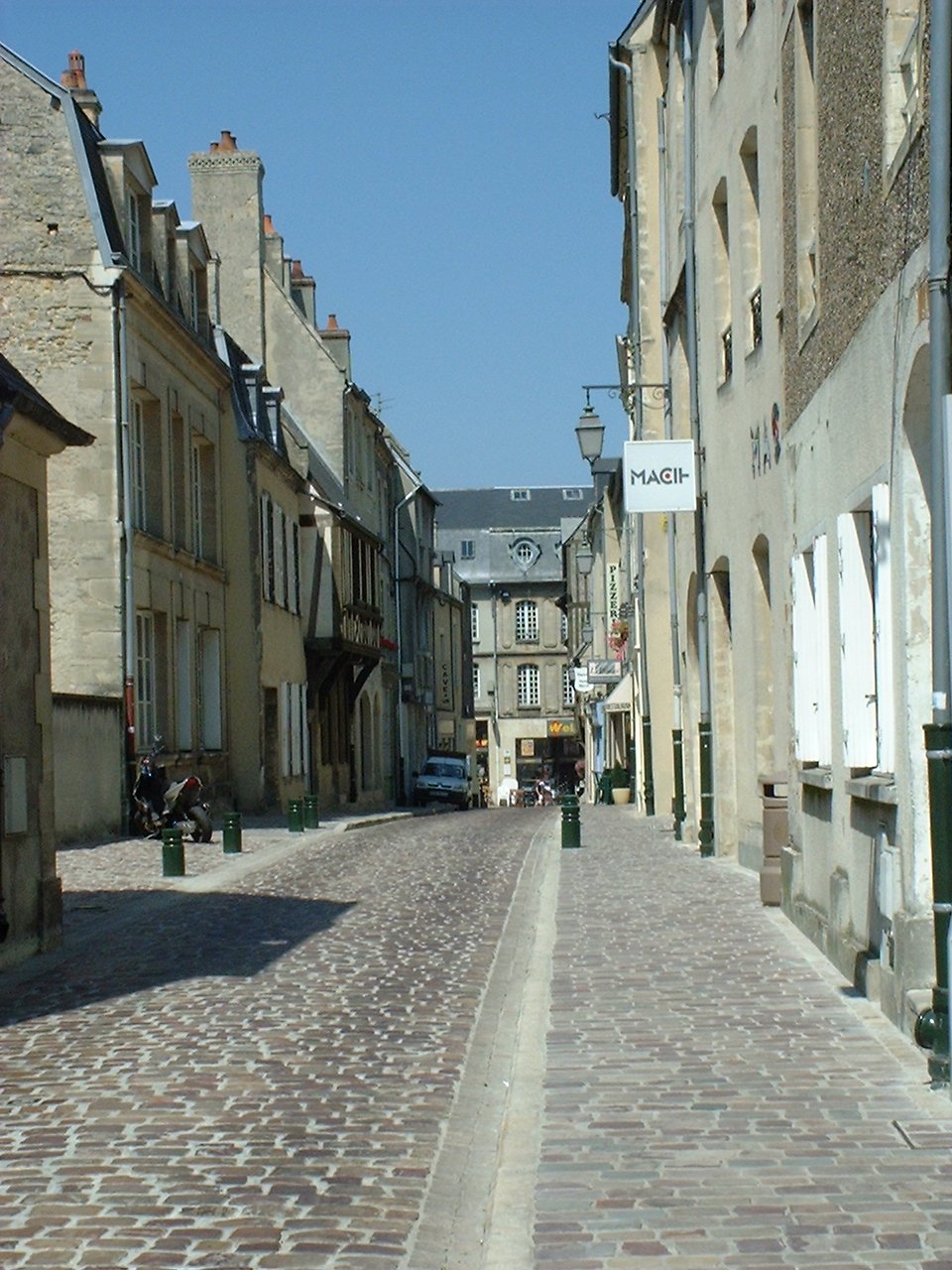
The first sizeable town liberated, on 7 June 1944, and spared the destruction that befell Caen. Famous for its medieval tapestry, Bayeux became a base for the Allies and for the world's press, and remains the gateway to the landing beaches.
Most visitors come to Bayeux for a piece of embroidered linen nearly a thousand years old, and leave surprised to find that the town played an outsized role in a second, twentieth-century invasion of France. Because it survived the summer of 1944 almost untouched, Bayeux is the rare Norman town where the medieval and the modern still stand side by side - and where you can read the whole arc of the campaign, from the first liberated street to the largest Commonwealth war cemetery in France.
The town that was spared
Bayeux sits a few miles inland from Gold Beach, and it was an objective for the British 50th (Northumbrian) Infantry Division on the very first day. Patrols probed its outskirts on the evening of 6 June, but the division's commander held back rather than risk a night battle in narrow streets. On the morning of 7 June troops entered against almost no resistance: the German garrison had largely withdrawn, and word reached the Allies - partly through the Resistance - that the town was not worth bombing. That single fact shaped everything that followed. Where Caen, thirty kilometres east, was ground to rubble over weeks of fighting, Bayeux came through with its cathedral, its timber-framed houses and its medieval core intact.
Its very medievalism, though, was a problem. The lanes were too tight for the columns of lorries and armour now pouring off the beaches, so Allied engineers threw a ring road - still known locally as the Bypass - around the town. Bayeux quickly became a rear-area hub: a transit point, and a hospital town where the seminary and schools were pressed into service to receive military and civilian wounded. On 14 June 1944 General de Gaulle arrived and delivered his first speech on liberated French soil here, a deliberate act of political theatre that made this small cathedral town, for a few weeks, the de facto capital of Free France until Paris fell in late August.
What to see today
The obvious pilgrimage is the Bayeux War Cemetery on the southern edge of town - the largest Commonwealth Second World War cemetery in France, with 4,648 graves. Walk it slowly and the campaign reveals itself in the headstones: overwhelmingly British, but also Canadian, Australian, New Zealand, Polish and others, and a substantial German plot of several hundred, buried with the same care. Reginald Blomfield's Cross of Sacrifice stands over the rows.
Directly across the road is the Bayeux Memorial, which names more than 1,800 Commonwealth men who fell in Normandy and have no known grave. Look up at the frieze for its Latin inscription - Nos a Gulielmo victi victoris patriam liberavimus - "We, once conquered by William, have set free the land of the Conqueror." It is the finest sentence in Bayeux and easy to miss: a nod, across nine centuries, from 1944 back to 1066 and the direction the Channel crossing ran the first time.
In the town centre, the Place Charles de Gaulle carries the monument to that 1944 speech, its text inscribed in stone. Nearby, journalists once filed dispatches censored line by line from the requisitioned Hôtel du Lion d'Or. That tradition of reporting from the front is honoured today at the Mémorial des Reporters, an avenue of white stelae in the botanical garden inscribed with the names of journalists killed around the world - the town also hosts an annual prize for war correspondents.
Between cemetery and centre sits the Memorial Museum of the Battle of Normandy, the best single place to understand the eleven-week campaign that these graves record. Give Bayeux at least half a day: it works both as a base for the beaches and as the one place where the human cost of the landings is laid out plainly, in stone and name, a short walk from the tapestry that made the town famous.
Practical notes
Bayeux is the easiest town on this coast to reach without a car: it sits on the Caen-Cherbourg railway line, and the station is a ten-minute walk from the centre. Drivers should use the ring road and the signed car parks on its inner edge rather than trying to thread the medieval lanes, which are tight and largely one-way. The cemetery and the memorial opposite it are open access and free; the museums are ticketed.
Give the war sites half a day and the town a full one. The cemetery and memorial take an hour if you walk the rows slowly, the Memorial Museum of the Battle of Normandy another hour and a half, and the tapestry and cathedral fill an afternoon on their own.
The town centre is flat but cobbled in places, with narrow pavements and a few kerbs that make a wheelchair or a pushchair harder work than the distances suggest; the cemetery itself is level, with mown grass between the headstones and a firm path around the perimeter. From here the coast is fifteen to twenty minutes north: Longues-sur-Mer Battery and the Mulberry remains at Arromanches make the standard half-day loop out and back.