Colleville-sur-Mer
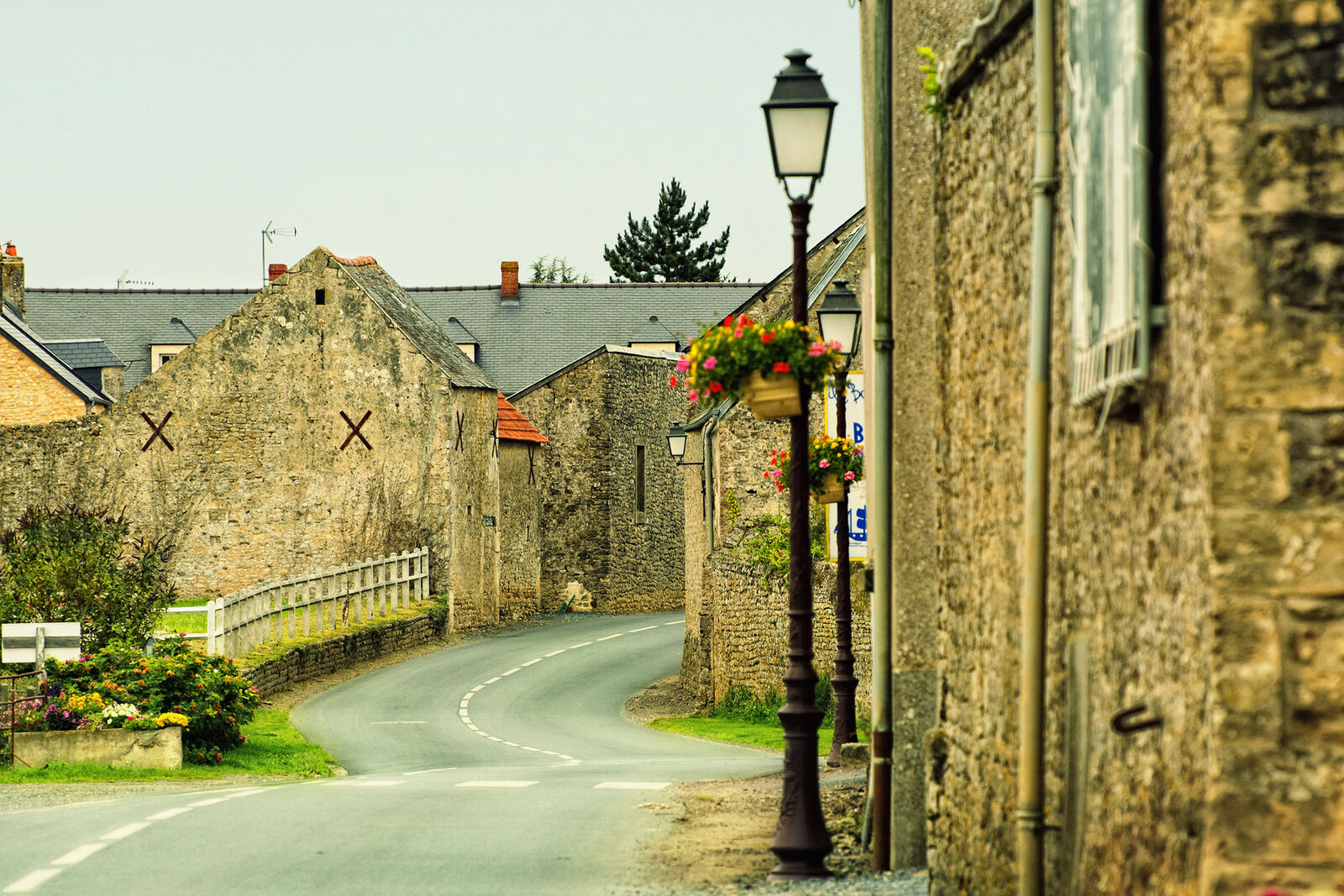
A commune on the bluffs above Omaha Beach, today home to the Normandy American Cemetery. Its heights held strong German positions in the Easy Red and Fox Green sectors, assaulted by the US 1st Infantry Division on 6 June 1944.
Most people who come to Colleville-sur-Mer are heading for one place: the vast white cemetery on the cliff. But the village itself, a small farming commune whose name traces back to a Norse settler called Koli, gave its name to one of the deadliest stretches of the Normandy coast. The bluffs that today frame rows of marble crosses were, on the morning of 6 June 1944, a wall of concrete and gunfire above the eastern sands of Omaha Beach.
The eastern end of "Bloody Omaha"
The beach below Colleville was divided into the sectors called Easy Red, Fox Green and Fox Red, and it was among the most heavily fortified ground on the whole invasion front. German strongpoints, numbered WN 60 through 63, were dug into the heights, with WN 62 dominating the sands and WN 61 guarding the E-3 draw, the ravine that offered the only vehicle route up off the beach toward the village.
Ashore came the 16th Infantry Regiment of the 1st Infantry Division, the "Big Red One", veterans of North Africa and Sicily. The plan unravelled at once. In a heavy swell, only a handful of the amphibious tanks meant to support them reached the sand; boats drifted off course, and the leading companies were cut down as the ramps dropped. Of the eight infantry companies that hit Omaha in the first wave, Company L, under Captain John Armellino, was the only one still able to function as a unit after crossing the beach, pushing inland through a fold in the bluffs the Germans had nicknamed the "valley of the Revolution".
It was here that a young lieutenant of the 16th Infantry, Jimmie Monteith, repeatedly crossed open, fire-swept ground to organise the survivors and lead them against the bunkers above. He was killed in the fighting and received the Medal of Honor posthumously. His story is one of many that the ground itself no longer shows, but which happened within a few hundred metres of where visitors now park their cars.
The village and the church tower
Getting off the beach was only the start. The fight moved up into the hedgerows and farmyards around the village, and Colleville was not fully in American hands until the following days. One detail is easy to miss: the medieval church of Notre-Dame de l'Assomption, its tower still standing today, was suspected of hiding a German artillery observer. From offshore, the destroyer USS Harding fired scores of shells at the steeple. Look at the tower now and you are looking at a survivor of a naval bombardment.
What to see today
The Normandy American Cemetery is the reason a million people a year come here. On land ceded in perpetuity by France, more than 9,380 Americans lie beneath the crosses and Stars of David, with over 1,550 more named on the semicircular Walls of the Missing. At the heart of the memorial stands the bronze figure "The Spirit of American Youth Rising from the Waves", facing a long reflecting pool. Seek out two graves in particular: Brigadier General Theodore Roosevelt Jr., a Medal of Honor recipient buried beside his brother Quentin, a pilot killed in the First World War; and the Niland brothers, whose family tragedy helped inspire the film "Saving Private Ryan".
Do not leave without walking the bluff itself. Below the cemetery lies WN 62, where you can still enter the concrete casemates and follow the trenches from which the German gunner Heinrich Severloh fired for hours across Easy Red. On top of one casemate sits the memorial to the 5th Engineer Special Brigade, and nearby stand memorials to the 1st Infantry Division and to its combat medics. From here the whole sweep of the beach opens below you, and the distance the men had to cross becomes brutally clear.
Practical notes
Colleville-sur-Mer sits just inland of the D514, with the cemetery signed off the same road a little to the north. The cemetery has its own large free car park; for the village and the church there is space near the centre, and the walk between the two is longer than the map suggests, so most people drive it. The village, the church and the strongpoint on the bluff are open access and free.
Allow half a day if you are combining the village with the cemetery and the bunkers below it. The cemetery alone takes two hours done properly, the church and village half an hour, and WN 62 another half hour.
The cemetery grounds are level and hard-surfaced and suit a wheelchair or a pushchair well. The bluff is the opposite: the paths down to the strongpoint are steep and uneven, the casemates are entered over broken concrete, and the trench lines are rough grass that turns slippery in wet weather. Stout shoes are worth having. Almost everyone continues down to the beach itself, and the Overlord Museum sits at the cemetery roundabout for anyone wanting the vehicles and the wider campaign.