Fort du Roule
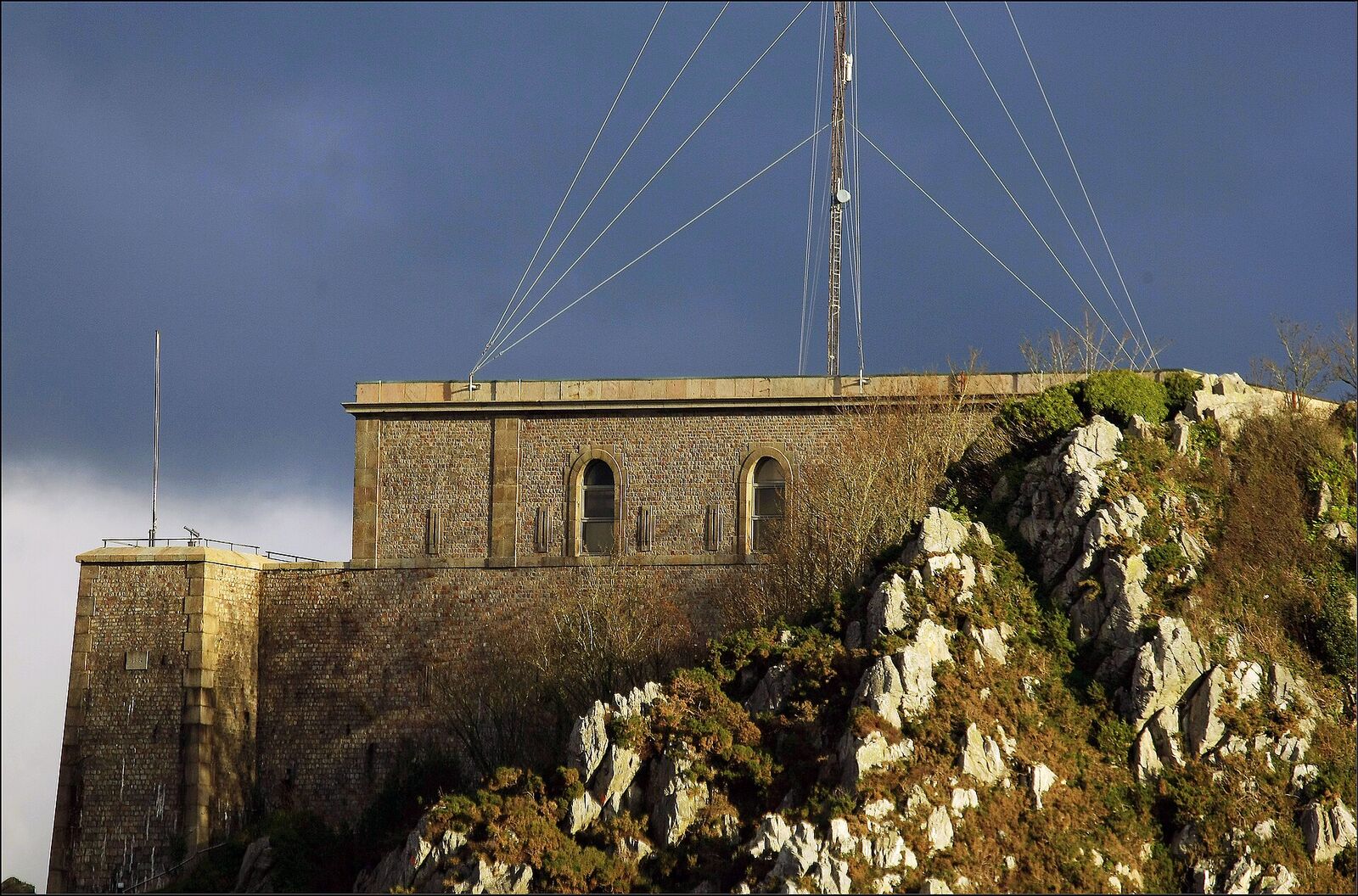
Perched on a rocky height over Cherbourg, this 19th-century fort was the scene of hard fighting for the city in 1944 and now houses the Musée de la Libération, which tells the story of the occupation and freeing of the Cotentin.
Most visitors arrive at Fort du Roule for the view, and it is a spectacular one: the whole sweep of Cherbourg's great harbour laid out 117 metres below, the breakwaters that made this one of the finest deep-water anchorages in Europe. That view is also the reason men fought and died for the rock you are standing on. Whoever held the Roule held Cherbourg, and in June 1944 the Allies needed the port more than almost anything else in Normandy.
Why the rock mattered
Cherbourg was the prize the invasion had been racing toward. The Normandy beaches could land troops, but a modern army needed a working port to feed the campaign, and Hitler had declared the city a fortress to be held to the last. Fort du Roule sat at the heart of that defence. The masonry fort on the summit dates from the 1850s, built under Napoleon III against a British threat that never came. The Germans turned it into the command hub of "Festung Cherbourg" and, crucially, cut a second fort into the seaward face of the cliff below the old one: concrete casemates housing coastal guns that pointed straight out over the harbour approaches.
That two-tier arrangement is the key to understanding what happened here, and it is easy to miss on the ground. The Americans could take the top of the hill and still be fired on by guns buried in the cliff beneath their feet.
The assault
The attack fell to the 79th Infantry Division's 314th Infantry Regiment, part of "Lightning Joe" Collins's VII Corps, on 25 June 1944. Fighter-bombers and naval guns worked the position over first, but the final approach came down to infantry crawling forward against machine-gun and mortar fire, blowing gaps in the wire with Bangalore torpedoes and reducing pillboxes one at a time.
Two men of the 314th earned the Medal of Honor on that slope. Corporal John D. Kelly, unable to silence a pillbox by fire, went forward under a pole charge of explosives, set it against the position, went back for more, and kept at it until the guns were wrecked and the crew surrendered. First Lieutenant Carlos C. Ogden, already wounded, climbed toward the crest alone and knocked out an 88mm gun and machine-gun nests with rifle grenades. The upper fort fell that evening, but the German gunners in the casemates below fought on, still shelling the harbour, and were only silenced the following day. Kelly did not live to receive his medal; he was killed later in 1944.
What to see today
The fort now holds the Musée de la Libération, opened in 1954 and among the oldest Second World War museums in Normandy. Its rooms trace the arc from the fall of France and the years of occupation through the Cotentin fighting to liberation, told with uniforms, weapons, documents and photographs from both sides, and with real attention to the civilian experience and the port's role as the supply artery of the Allied armies.
Before going in, walk the terrace and orient yourself. Pick out the harbour breakwaters and imagine the field of fire the coastal guns commanded, then remember that those guns were below you, in the cliff, not in the fort at your back. That single fact makes sense of the two-day battle. Look for the concrete German additions grafted onto the older French stonework, the embrasures and firing positions worked into the rock, and the marks of the fighting the structure still carries.
Getting up here rewards a little effort: the fort crowns a steep height above the city centre, so come by car or be ready for a stiff climb. Give yourself time for both the museum and the ramparts, and go on a clear day. The panorama is not a bonus to the history here. It is the history.
Practical notes
The road up the Montagne du Roule climbs steeply from the southern side of the city in a series of bends, and there is parking at the top close to the museum entrance and the terrace. Walking up from the centre is possible for the reasonably fit but it is a sustained climb of well over a hundred metres, so the car is the sensible choice unless you want the exercise. The museum is ticketed; the terrace and the views around the fort are not.
Allow an hour and a half. That is roughly an hour inside the museum and half an hour outside on the ramparts, picking apart the German concrete grafted onto the French stonework and working out the geography of the harbour below.
Accessibility is the weak point. This is a nineteenth-century fort adapted into a museum, so there are steps between levels, narrow doorways and sloping ramparts with uneven surfaces underfoot, and parts of the visit will not suit a wheelchair or a large pushchair. The exposed terrace is windy in any weather. If you are working your way back down the Cotentin afterwards, Valognes is on the direct road south, and Crisbecq Battery shows the coastal-gun story from the other end of the peninsula.